Mapo Tofu
Silky tofu in a tingly, spicy bean-paste sauce.
← Home · Sichuan weeknight yuxiang flavour
Shredded pork in the classic Sichuan yuxiang sauce — sweet, sour, salty and lightly spicy, with garlic, ginger and scallion doing the fragrant work. Adapted for a home kitchen from the original ClouChef R&D report — 鱼香肉丝, report 5.
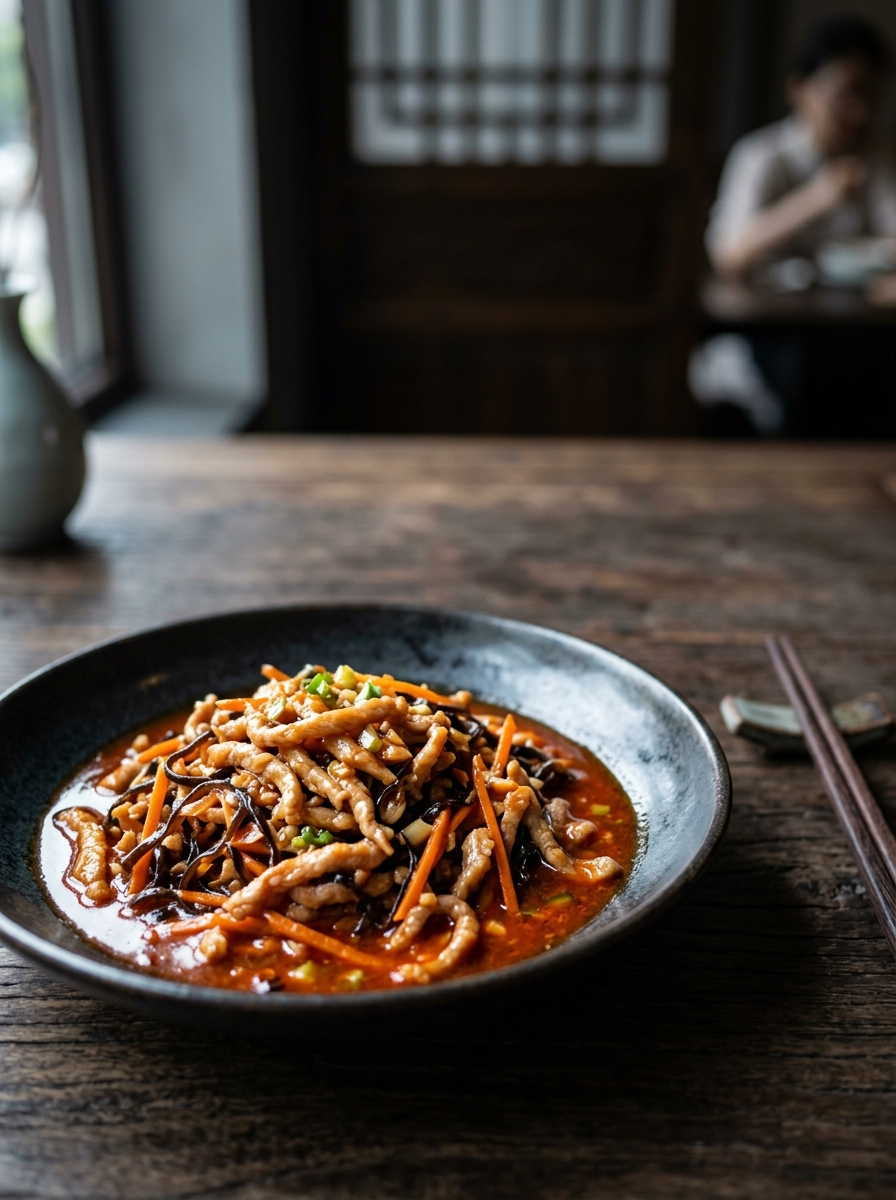
Yuxiang means 'fish-fragrant' but contains no fish: the name describes a seasoning style built on pickled chilli, doubanjiang, garlic, ginger and scallion, finished with a bowl sauce whose sugar-to-vinegar ratio the report fixes at 3:4. That ratio is the whole dish — sweet enough to round the vinegar, sour enough to keep it appetising, with heat sitting underneath rather than on top. Velveting the pork shreds in egg white and starch protects them during a very fast slide through oil, so they stay tender instead of drying out. The vegetables go in only briefly, so the wood ear stays springy and the carrot keeps a little bite. Because the sauce is premixed and the final reduction lasts just seconds, everything must be ready before the wok heats: this is a dish won or lost in preparation, not in cooking time. Serve it over plain rice, which soaks up the glossy sauce and balances the vinegar's edge.
| Ingredient | US | Metric | Substitute / note |
|---|---|---|---|
| Pork tenderloin, cut into fine shreds 8 cm long | 5.3 oz | 150 g | Cut across the grain; pork loin works but is less tender (adaptation). |
| Wood ear mushrooms, soaked and shredded | 1.8 oz | 50 g | Dried wood ear, soaked until soft, then shredded. |
| Carrot, shredded | 1.8 oz | 50 g | — |
| Salt (velveting) | Pinch | 1 g | — |
| Cooking wine (velveting) | 1 tsp | 5 ml | Shaoxing wine. |
| Egg white (velveting) | ⅓ egg white | 10 g | — |
| Corn starch (velveting) | 1 tsp | 5 g | — |
| Pickled chilli (paojiao), minced | 0.5 oz | 15 g | From an Asian grocery; do not substitute fresh chilli, which lacks the pickled tang. |
| Pixian doubanjiang | 2 tsp | 10 g | Chopped before use. |
| Ginger, minced | 1 tsp | 5 g | — |
| Garlic, minced | 2 cloves | 10 g | — |
| Scallions, chopped | ⅓ cup | 10 g | For finishing. |
| Sugar (bowl sauce) | 1 tbsp | 15 g | Report ratio sugar:vinegar 3:4 by weight. |
| Vinegar (bowl sauce) | 4 tsp | 20 ml | Chinkiang black vinegar or rice vinegar. |
| Light soy sauce (bowl sauce) | 2 tsp | 10 ml | — |
| Water starch (bowl sauce) | 1 tbsp | 15 ml | Corn starch mixed with water. |
| Water (bowl sauce) | 2 tbsp | 30 ml | — |
| Neutral cooking oil | 2 tbsp | 30 ml | Report gives no oil quantity; 30 ml is the home adaptation used here. |
Sugar and vinegar must be premixed, because there is no time to adjust once the pan is hot: the final reduction lasts under ten seconds. If the sauce tastes flat, the vinegar is short; if it tastes sharp, the sugar is short. Stir the bowl sauce again just before pouring, since the starch settles, and pour around the pan's edge so it hits hot metal and thickens evenly rather than pooling on the pork.
The name describes the seasoning combination — pickled chilli, garlic, ginger, scallion, sugar and vinegar — traditionally used with fish, here applied to pork.
Usually the oil was too hot, the shreds were not dried before velveting, or they were cooked longer than about 30 seconds. Keep the slide fast and the oil at or below 130 °C.
Yes, but cut it very finely and do not overcook it; loin dries out faster than tenderloin.
Best eaten fresh. Leftovers keep 1 day refrigerated; reheat gently until steaming hot throughout and do not reheat more than once. Not recommended for freezing — the velveted shreds turn soggy.
Shredded pork in a sweet-sour-spicy yuxiang sauce with wood ear and carrot.
Ingredients: 150 g pork tenderloin; 50 g wood ear; 50 g carrot; velveting: 1 g salt, 5 ml cooking wine, 10 g egg white, 5 g corn starch; 15 g pickled chilli; 10 g doubanjiang; 5 g ginger; 10 g garlic; 10 g scallions; bowl sauce: 15 g sugar, 20 ml vinegar, 10 ml soy sauce, 15 ml water starch, 30 ml water; 30 ml oil.
Steps: 1) Velvet pork 5 minutes. 2) Mix bowl sauce. 3) Slide pork in 120 °C oil ~30 seconds, remove. 4) Bloom chilli and bean paste, add ginger and garlic. 5) Add vegetables, return pork, pour in bowl sauce and reduce 5–8 seconds.
Silky tofu in a tingly, spicy bean-paste sauce.
Sichuan's famous sweet, sour, salty and tingly chicken — pan-fried, not deep-fried, with peanuts for crunch.
First boiled, then stir-fried: pork belly slices with garlic shoots and a savoury bean-paste sauce.
Source note: ingredients, quantities and steps are adapted from the original ClouChef R&D report for 鱼香肉丝 (data/reports/5.md). The report's pricing, margin and marketing sections are deliberately omitted here; no B2B cost is presented as a home-cook cost. The report's own cost tables are arithmetically inconsistent with each other (the ingredient table totals far above the cost summary), so no cost figures are reproduced. The oil quantity, not given in the report, and the 2-serving presentation are adaptations and are labelled as such. Original poster image: clouchef.com (鱼香肉丝_5.jpeg).