Lamb Noodle Soup
Warming lamb broth ladled over noodles.
← Home Xinjiang chicken spicy
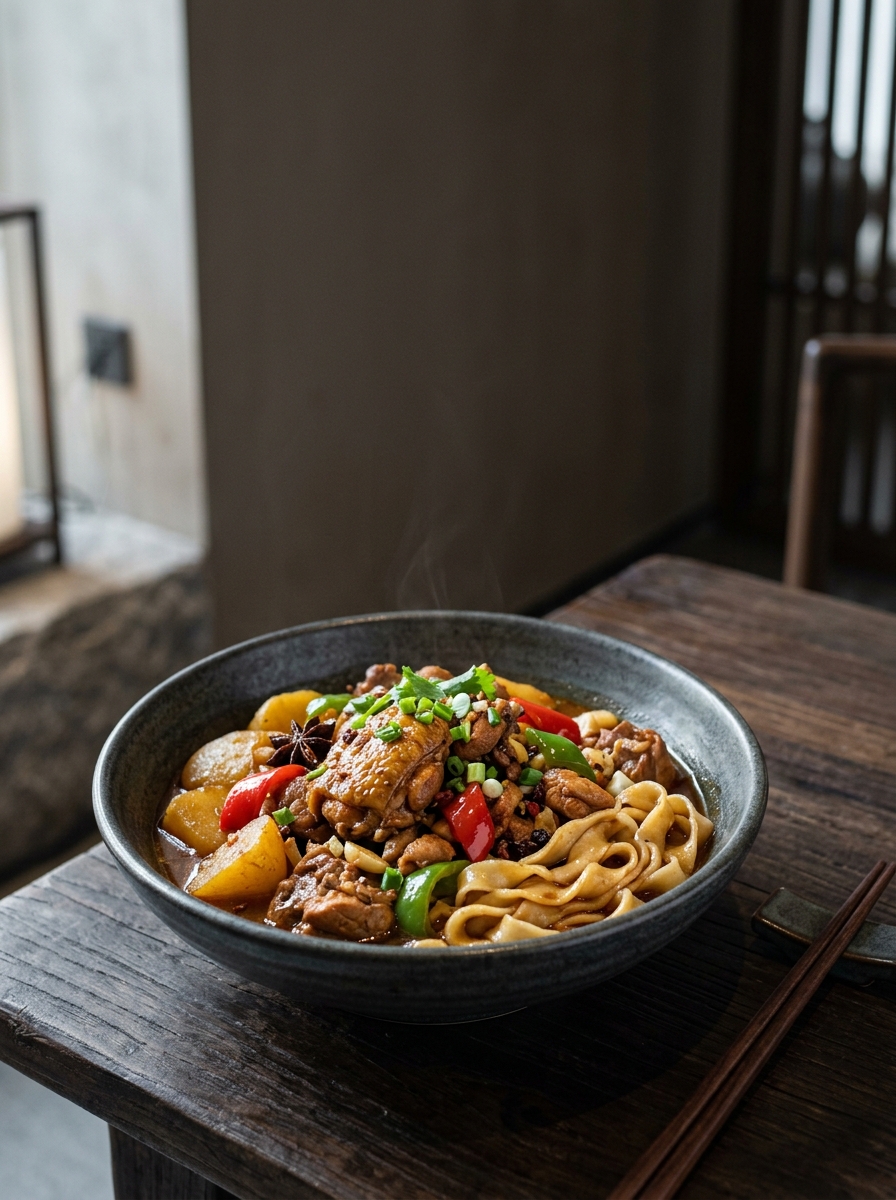
Chicken fried crisp, braised with potato in a chilli bean-paste broth, and poured over wide hand-pulled belt noodles. Adapted from the original ClouChef R&D report — 新疆大盘鸡, report 171.
Home adaptation note: The report is one restaurant portion (400 g chicken, about 800 g finished). Quantities below are that portion, served as 2–3 at home. The belt noodles are made from the report's 200 g flour; shop-bought wide noodles are a home adaptation.
Big plate chicken is a dish of two starches working together: the potato that thickens the braise, and the noodles underneath that drink up whatever sauce is left. The chicken is fried first at one hundred and eighty degrees for about three minutes, which gives it a crisp edge that survives the braise instead of turning soggy. The braise itself is short — twelve minutes on medium heat — because the chicken is already cooked and the potato needs just long enough to turn soft without dissolving. The report's measure of success is concrete: about one hundred millilitres of sauce should remain, enough to coat the noodles without drowning them. Green pepper goes in only for the final two-minute reduction, so it stays bright and crisp against the rich, dark stew. The noodles are boiled separately for two minutes and rinsed in cold water, which keeps them springy under the hot topping.
| Ingredient | US | Metric | Substitute / note |
|---|---|---|---|
| Chicken (San Huang or similar), cut into chunks | 14 oz | 400 g | Bone-in chunks, per the report. |
| Potato, cut into rolling chunks | 7 oz | 200 g | Soak in water after cutting to prevent browning. |
| Green pepper, cut into chunks | 1.8 oz | 50 g | Add only for the final reduction. |
| Wheat flour (for belt noodles) | 7 oz | 200 g | Plus water to make a dough; shop-bought wide noodles are an adaptation. |
| Dried chillies | 0.35 oz | 10 g | — |
| Sichuan pepper | 1 tsp | 5 g | — |
| Doubanjiang (chilli bean paste) | 2 tbsp | 30 g | — |
| Scallion, ginger, garlic | 1 oz total | 30 g | Report gives a combined figure; split roughly evenly (adaptation). |
| Shaoxing wine and ginger (marinade) | To taste | To taste | No quantities in the report; a home adaptation. |
| Stock or water | 2 cups | 500 ml | — |
| Salt and sugar | To taste | To taste | Report says to taste for these. |
| Neutral oil for frying | Enough to cover | Enough to cover | Fry at 180 °C; drain well. |
| Scallion (garnish) | To garnish | To garnish | — |
Frying first is what keeps the chicken from falling apart in the braise. Twelve minutes is deliberately short: the potato should be soft but still in pieces, and the sauce should still be generous enough for the noodles.
The braise ran past 12 minutes, or the potato was cut too small. Cut rolling chunks and hold the time.
The sauce was reduced too far. Stop when about 100 ml remains — enough to coat the noodles.
You can braise it directly, but the texture changes: unfried chicken softens faster and the dish loses its crisp-edged contrast.
Keeps 2 days refrigerated; reheat to a full boil. Store noodles separately and pour the hot chicken over them when serving.
Crisp-fried chicken braised with potato, served over wide belt noodles.
Ingredients: 400 g chicken; 200 g potato; 50 g green pepper; 200 g flour (noodles); 10 g dried chilli; 5 g Sichuan pepper; 30 g doubanjiang; 30 g scallion, ginger, garlic; 500 ml stock; salt and sugar to taste.
Steps: 1) Soak and marinate chicken. 2) Make and boil belt noodles. 3) Fry chicken at 180 °C for 3 minutes. 4) Fry spices and bean paste, braise with potato 12 minutes. 5) Add green pepper, reduce, serve over noodles.
Warming lamb broth ladled over noodles.
Silky tofu in a tingly, spicy bean-paste sauce.
Pork first simmered, then stir-fried with peppers and bean paste.
Source note: ingredients, quantities and steps are adapted from the original ClouChef R&D report for 新疆大盘鸡 (data/reports/171.md). The report's pricing, margin and marketing sections are deliberately omitted here; no B2B cost is presented as a home-cook cost. Salt, sugar, wine and ginger quantities are 'to taste' or unquantified in the report and are labelled as adaptations.