Twice-Cooked Pork
Pork belly first boiled, then stir-fried in red bean-paste oil.
← Home · Jiangxi seasonal weeknight
Spring's Jiangxi classic: crisp, fragrant water dropwort flash-fried with smoky cured pork and dried chillies — done in two and a half minutes once the pork is steamed. Adapted for a home kitchen from the original ClouChef R&D report — 藜蒿炒腊肉, report 147.
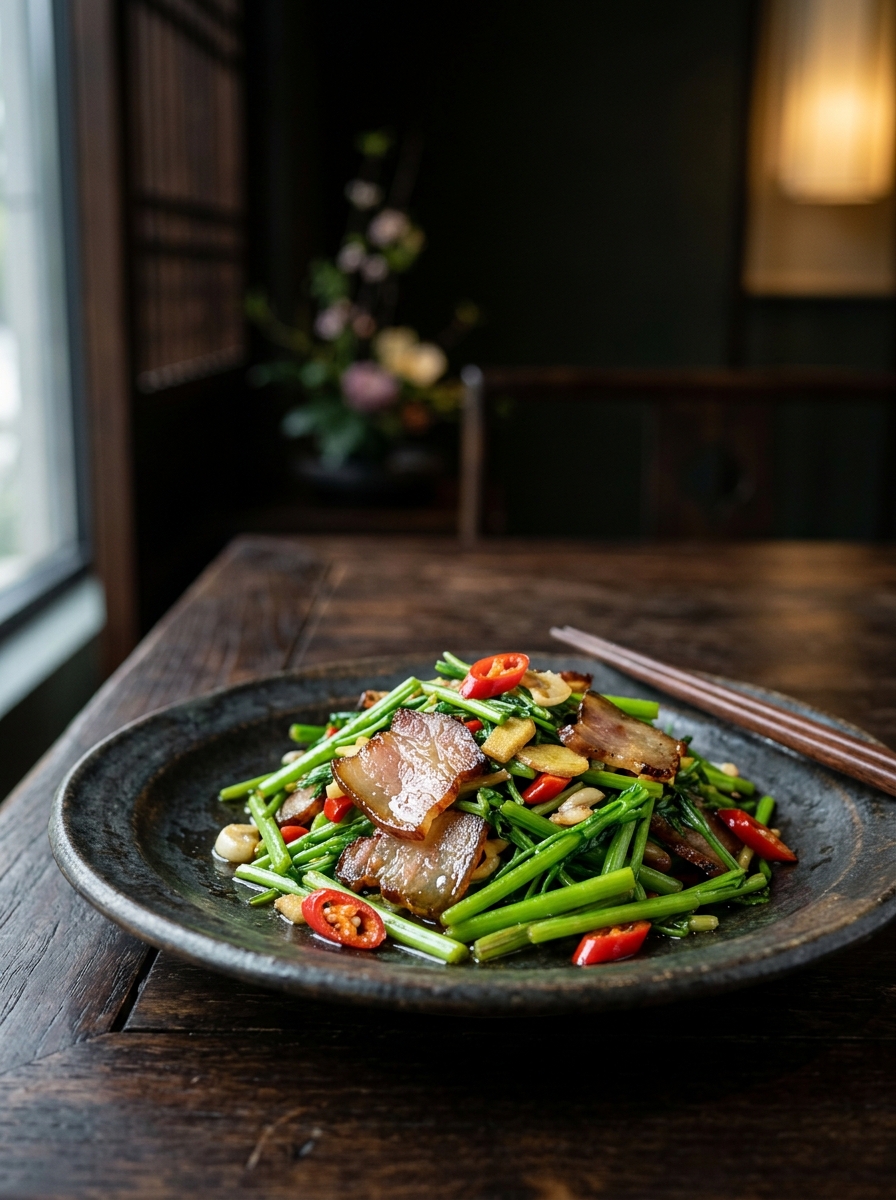
Water dropwort is a spring vegetable with a short temper: fifty seconds over high heat and it is crisp, fragrant and a deep green; a minute longer and it collapses into a soft, watery tangle. The whole recipe is organised around protecting that window. Cured pork is steamed twenty minutes first so it is tender enough to slice thin and render quickly, and it is fried until its fat turns translucent before the vegetable ever touches the pan — that fat is the cooking medium and the seasoning at once. Chillies and ginger bloom for thirty seconds to perfume the oil, then the dropwort goes in for forty to fifty seconds until its colour deepens and its edges just curl. Seasoning comes last and light, because the pork is already salty: taste before adding salt, or the dish that should taste of spring tastes only of the cure. Eat it the moment it leaves the wok, with rice, while the dropwort still crackles.
| Ingredient | US | Metric | Substitute / note |
|---|---|---|---|
| Water dropwort (lihao), trimmed, cut into 4 cm lengths | 7 oz | 200 g | A Jiangxi spring wild vegetable; Chinese celery leaves and tender stems are the nearest substitute but lack its fragrance (adaptation). Buy it fresh in spring at Asian groceries. |
| Cured pork belly (larou), steamed then sliced 0.3 cm | 3.5 oz | 100 g | — |
| Dried chillies, cut into small segments | 0.18 oz | 5 g | — |
| Ginger, minced | 0.35 oz | 10 g | — |
| Salt | ¼ tsp | 2 g | Adjust to the saltiness of your cured pork — the source says to taste the pork first. |
| Light soy sauce | 1 tsp | 5 ml | — |
| Shaoxing wine | 1 tsp | 5 ml | — |
| Neutral cooking oil | 1 tbsp + 1 tsp | 20 ml | — |
Water dropwort's crispness comes from turgid, water-filled stems; high heat drives that water out fast, and once it goes the stems cannot recover. That is why the pan must be at full heat before the vegetable goes in, why the leaves must be dry, and why the total time from dropwort to plate is under a minute. Any step that adds water — wet leaves, a crowded pan, a lid — turns a flash-fry into a steam and costs the dish its point.
A fragrant spring vegetable (Artemisia selengensis) beloved in Jiangxi cooking, with slender green stems and a distinctive herbal aroma. It is seasonal — buy it fresh in spring.
It was fried too long, the pan was not hot enough, or the leaves were wet. Dry leaves, full heat, 40–50 seconds maximum.
You can, but bacon is saltier and smokier in a different register; reduce added salt to nothing and taste before seasoning.
Best eaten immediately; the dropwort wilts within minutes. Leftovers keep 1 day refrigerated but will be soft; reheat quickly over high heat until steaming hot. The steamed pork slices alone keep 3 days refrigerated.
Crisp spring water dropwort flash-fried with smoky cured pork and chillies.
Ingredients: 200 g water dropwort; 100 g cured pork belly; 5 g dried chillies; 10 g ginger; 2 g salt; 5 ml light soy sauce; 5 ml wine; 20 ml oil.
Steps: 1) Steam pork 20 minutes, cool, slice 0.3 cm. 2) Trim dropwort, cut 4 cm, drain dry. 3) Fry chillies and ginger 30 seconds. 4) Fry pork ~1 minute until fat is translucent. 5) High heat, fry dropwort 40–50 seconds. 6) Add wine, salt, soy, toss once, serve at once.
Pork belly first boiled, then stir-fried in red bean-paste oil.
Eggplant, potato and green pepper in a savoury sauce.
Slow-braised bamboo shoots and salted pork in a clear, rich broth.
Source note: ingredients, quantities and steps are adapted from the original ClouChef R&D report for 藜蒿炒腊肉 (data/reports/147.md). The report's pricing, margin and marketing sections are deliberately omitted here; no B2B cost is presented as a home-cook cost. Original poster image: clouchef.com (藜蒿炒腊肉_147.jpeg). The 1–2 serving presentation and the Chinese-celery substitute note are adaptations and are labelled as such.