Hong Shao Rou
Slow-braised pork belly in a dark, sweet-savoury glaze.
← Home · steamed pork taro
Pork belly blanched, deep-fried to a tiger-skin crackle, then layered with taro and steamed until melting, in a fermented bean-curd sauce. Adapted for a home kitchen from the original ClouChef R&D report — 香芋扣肉, report 192.
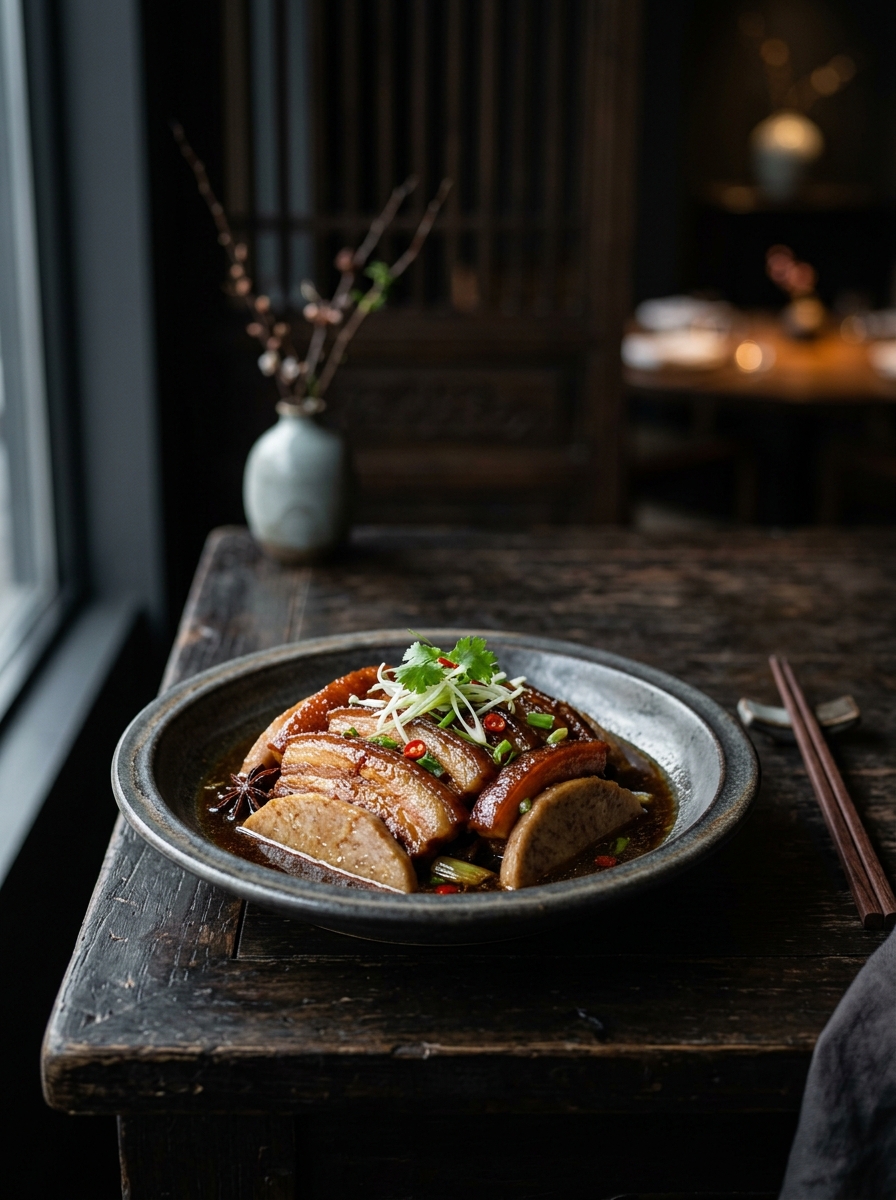
This is a dish built in three acts, and each one earns the next. Boiling the belly to about seventy percent done firms it enough to slice cleanly without falling apart, while pricking the skin lets fat escape and flavour in. Frying skin-side down at 180 °C creates the tiger-skin blistering that gives the dish its name and its texture, and the immediate plunge into cold water is what makes that skin springy rather than merely crisp. Layering pork and taro in alternating slices is not decoration: as they steam together for ninety minutes, the taro absorbs pork fat and turns powdery-soft, while the pork absorbs the taro's fragrance and the fermented bean-curd sauce. The final flip — inverting the bowl onto a plate while still hot — is the moment of truth, which is why the report insists on doing it hot: cooled, the slices stick and the neat layers collapse. It is long, but almost all of the time is unattended steaming.
| Ingredient | US | Metric | Substitute / note |
|---|---|---|---|
| Pork belly, skin on | 12.3 oz | 350 g | — |
| Liputang taro (or any firm taro) | 8.8 oz | 250 g | Cut to match the pork slices; other taro varieties work (adaptation). |
| Fermented bean curd, with its liquid | 1 oz | 30 g | About 2 cubes, mashed. |
| Light soy sauce | 4 tsp | 20 ml | — |
| Sugar (rock sugar or white sugar) | 1 tbsp | 15 g | — |
| Cooking wine | 2 tsp | 10 ml | — |
| Ginger slices | 0.2 oz | 5 g | — |
| Salt | 1/2 tsp | 3 g | — |
| Star anise | 1 piece | 1 piece | — |
| Dark soy sauce and a little sugar, for colouring | To taste | To taste | Report gives no quantities; brush lightly (adaptation). |
| Neutral oil, for deep-frying | About 2 cups | 500 ml | Only about 30 ml is absorbed; the rest can be strained and reused (report note). |
| Corn starch and water, for thickening | To taste | To taste | Report says thicken the reserved juices lightly; use about 1 tsp starch in 2 tsp water (adaptation). |
The skin's texture is decided in two minutes of frying and twenty minutes of cold soaking: frying blisters it, cold water tightens it into the springy, pocked surface that defines kou rou. Everything after that is patience — a short steam leaves taro chalky and pork firm, while the full ninety minutes lets fat and taro trade places. Invert while hot or not at all.
It sets the blistered tiger skin so it stays springy after the long steam, instead of going soft.
The bowl had cooled, or the slices were cut too thick. Invert while hot and keep slices at 0.5 cm.
You can sear the skin in a dry hot pan, but you will not get true tiger skin; the dish will still taste good (adaptation).
Keeps 3 days refrigerated; reheat by steaming 20 minutes until steaming hot throughout. Freezes well up to 1 month before the final inversion — thaw overnight in the fridge, then steam and invert.
Tiger-skin pork belly layered with taro and steamed in fermented bean-curd sauce.
Ingredients: 350 g pork belly; 250 g taro; 30 g fermented bean curd; 20 ml light soy sauce; 15 g sugar; 10 ml cooking wine; 5 g ginger; 3 g salt; 1 star anise; dark soy and sugar for colouring (quantities not given); 500 ml frying oil (about 30 ml absorbed); starch for thickening (quantity not given).
Steps: 1) Boil 30 minutes, prick and colour skin. 2) Fry to tiger skin, soak 20 minutes. 3) Slice and layer with taro. 4) Steam 90 minutes, invert hot and glaze.
Slow-braised pork belly in a dark, sweet-savoury glaze.
First boiled, then stir-fried: pork belly slices with garlic shoots and a savoury bean-paste sauce.
Fragrant sticky rice steamed with mushrooms, dried shrimp and pork — a Hakka celebration dish.
Source note: ingredients, quantities and steps are adapted from the original ClouChef R&D report for 香芋扣肉 (data/reports/192.md). The report's pricing, margin and marketing sections are deliberately omitted here; no B2B cost is presented as a home-cook cost. The colouring and thickening quantities, not given in the report, and the safety temperature are home adaptations and are labelled as such. Original poster image: clouchef.com (香芋扣肉_192.jpeg).