Kung Pao Chicken (No Deep-Frying)
Sichuan's famous sweet, sour, salty and tingly chicken — pan-fried, not deep-fried, with peanuts for crunch.
← Home · spicy chicken rice cakes
Boneless chicken thigh cubes flash-cooked with dried chilli and Sichuan pepper, tossed with chewy sliced rice cakes. Adapted for a home kitchen from the original ClouChef R&D report — 辣子鸡丁炒年糕, report 188.
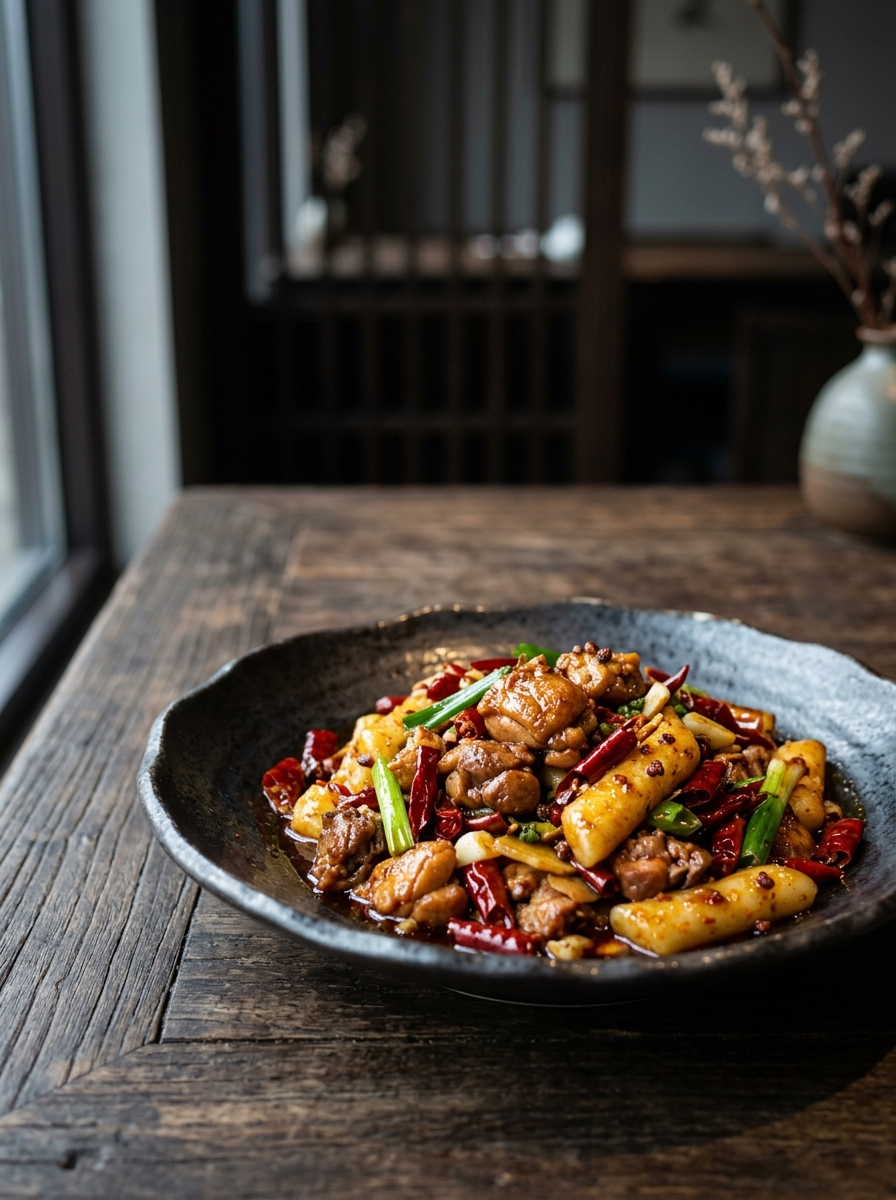
This dish works by pairing two textures that arrive from opposite directions: chicken that is only just cooked, so it stays juicy, and rice cakes that are only briefly fried, so they turn lightly crisp outside while staying chewy inside. The report's timing is deliberately tight — a two-minute slide for the chicken, one minute for the chillies, one minute for everything together — because any longer and the rice cakes go soft and sticky and the chillies turn bitter. Deseeding the chillies matters more than it looks: it keeps the fragrance and red oil without the harsh bitterness that seeds bring. Slicing the chicken to a uniform 1.5 cm means every cube finishes at the same moment, and cooking the rice cakes straight from frozen, as the report directs, stops them clumping. The final high-heat toss is about coating, not further cooking: the chicken should come out glossed in red oil, the rice cakes lightly charred at the edges, and nothing sitting in a pool of sauce.
| Ingredient | US | Metric | Substitute / note |
|---|---|---|---|
| Boneless chicken thigh, cut into 1.5 cm cubes | 7 oz | 200 g | Report says boneless chicken leg; breast dries out faster (adaptation note). |
| Sliced water-milled rice cakes (nian gao) | 4.2 oz | 120 g | Use straight from frozen, as the report directs; fresh sliced rice cakes work too (adaptation). |
| Dried chillies (er jing tiao), cut into 2 cm segments, deseeded | 0.5 oz | 15 g | Deseeding reduces bitterness, per the report. |
| Red Sichuan peppercorns | 1 tsp | 5 g | — |
| Ginger slices | 0.35 oz | 10 g | — |
| Scallion segments | 0.35 oz | 10 g | — |
| Cooking wine, for marinating | 2 tsp | 10 ml | — |
| Salt | 1/2 tsp | 3 g | Part for marinating, part for final seasoning; report gives 3 g total. |
| Light soy sauce | 1 tsp | 5 ml | Part for marinating, part for final seasoning; report gives 5 ml total. |
| Neutral cooking oil | 2 tbsp | 30 ml | — |
Every stage has a ceiling in the report: chicken 2 minutes, chillies 1 minute, rice cakes under 1 minute, final reduction 30 seconds. Exceeding any one of them breaks something — dry chicken, bitter chilli, or gummy rice cakes. Have everything cut and within reach before the pan heats, because there is no pause once the slide starts.
The report directs it: frozen slices hold their shape and do not stick together in the pan, while thawed slices soften too fast.
They were fried longer than about a minute total, or the heat was too low so they steamed instead of searing.
Yes, but cut it the same size and do not exceed 2 minutes in the pan, or it will dry out.
Best eaten fresh; rice cakes harden as they cool. Leftovers keep 1 day refrigerated; reheat in a hot oiled pan until steaming hot, not in the microwave, which makes them rubbery. Not recommended for freezing.
Chilli-and-pepper chicken cubes tossed with chewy, lightly charred rice cakes.
Ingredients: 200 g boneless chicken thigh; 120 g sliced rice cakes; 15 g dried chillies; 5 g Sichuan pepper; 10 g ginger; 10 g scallion; 10 ml cooking wine; 3 g salt; 5 ml light soy sauce; 30 ml oil.
Steps: 1) Marinate chicken 5 minutes. 2) Slide chicken in 150 °C oil 2 minutes, remove. 3) Bloom chillies and pepper 1 minute. 4) Add rice cakes and chicken, season, toss 30 seconds.
Sichuan's famous sweet, sour, salty and tingly chicken — pan-fried, not deep-fried, with peanuts for crunch.
Silky tofu in a tingly, spicy bean-paste sauce.
First boiled, then stir-fried: pork belly slices with garlic shoots and a savoury bean-paste sauce.
Source note: ingredients, quantities and steps are adapted from the original ClouChef R&D report for 辣子鸡丁炒年糕 (data/reports/188.md). The report's pricing, margin and marketing sections are deliberately omitted here; no B2B cost is presented as a home-cook cost. The 74 °C chicken safety temperature is a home adaptation, added because the report gives oil temperature but no core temperature. Original poster image: clouchef.com (辣子鸡丁炒年糕_188.jpeg).