Kung Pao Chicken
Sweet-sour-spicy Sichuan chicken with crisp peanuts.
← Home · Shandong weeknight sauce-forward
The Shandong answer to kung pao: less chilli heat, more sauce — chicken, cucumber and peanuts in a glossy sweet-sour-savoury glaze. Adapted for a home kitchen from the original ClouChef R&D report — 鲁式宫保鸡丁, report 126. Not the Sichuan version.
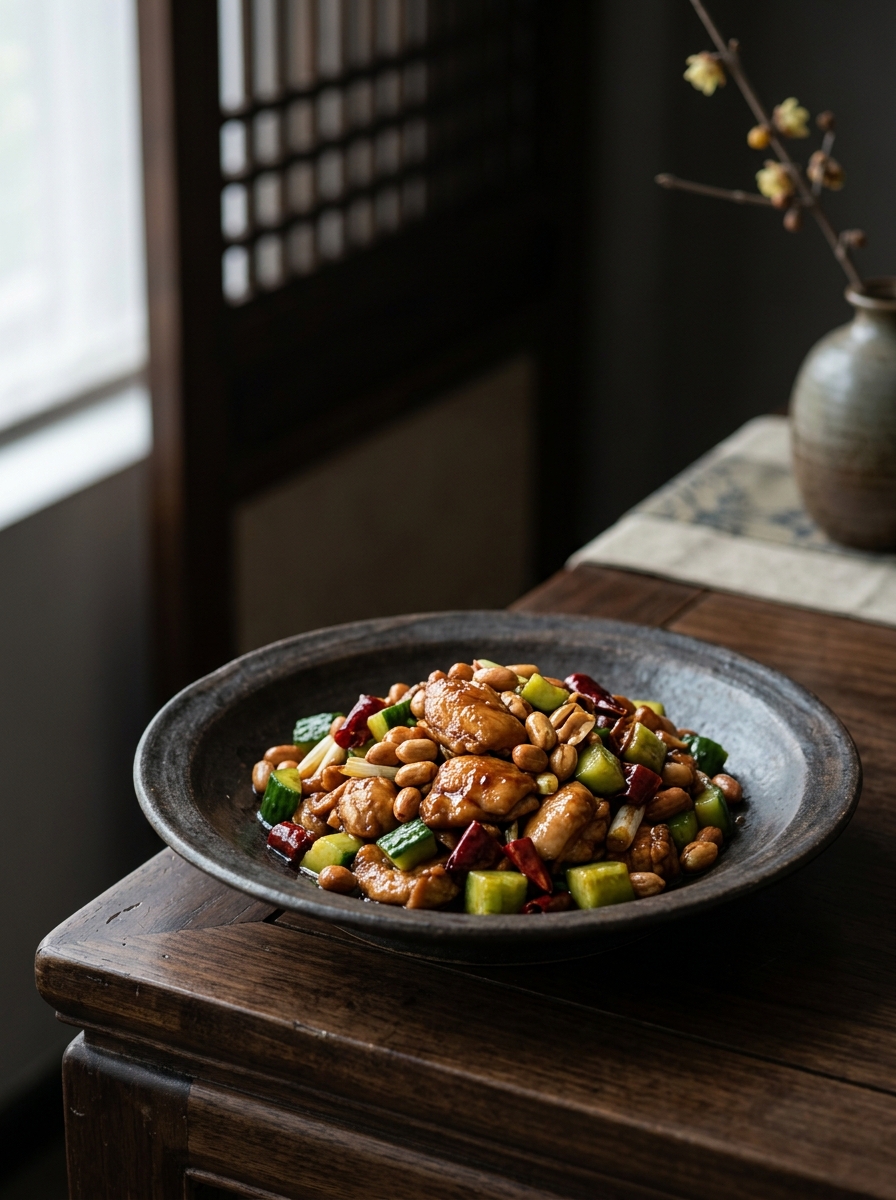
Where Sichuan kung pao leads with chilli and tingle, the Shandong version leads with sauce. The report's ratio is the whole recipe: sugar, vinegar and light soy in a 4:3:2 balance, so the glaze tastes sweet first, sour second and savoury underneath, with chilli as background warmth rather than the point. Chicken cut to 1.5 cm and velveted in egg white and starch stays tender through a fast slide in oil at 120–140 °C, and peanuts fried gently to pale gold finish crisping in their own residual heat. Cucumber goes in last with the chicken, so it stays green and crunchy against the glossy coating. The final rule is speed: once the sauce hits the pan, thirty seconds of high-heat tossing is enough — any longer and the glaze turns sticky, dull and clingy instead of bright. Serve it with steamed rice, which soaks up the glaze, and keep the cucumber crisp by tossing it in only at the very end.
| Ingredient | US | Metric | Substitute / note |
|---|---|---|---|
| Chicken breast, cut into 1.5 cm cubes | 5.3 oz | 150 g | Thigh works and is juicier, cut the same size (adaptation). |
| Cucumber, cut into cubes | 2.8 oz | 80 g | Seeded if very watery (adaptation). |
| Peanuts, fried | 1 oz | 30 g | Ready-roasted unsalted peanuts save a step (adaptation). |
| Dried chillies, cut into segments | 0.18 oz | 5 g | — |
| Sichuan peppercorns | 1 tsp | 2 g | — |
| Scallion, ginger and garlic, minced together | 0.5 oz | 15 g | Combined quantity as in the source. |
| Salt (marinade) | ¼ tsp | 2 g | — |
| Shaoxing wine (marinade) | 1 tsp | 5 ml | — |
| Light soy sauce (marinade) | ½ tsp | 3 ml | — |
| Egg white (marinade) | ½ egg white | 15 g | — |
| Corn starch (marinade) | 1 tsp | 5 g | — |
| Sugar (sauce) | 1 tbsp + 1 tsp | 20 g | — |
| Vinegar (sauce) | 1 tbsp | 15 ml | — |
| Light soy sauce (sauce) | 2 tsp | 10 ml | — |
| Corn starch (sauce) | 1 tsp | 5 g | — |
| Water (sauce) | 2 tbsp | 30 ml | — |
| Neutral cooking oil | 2 tbsp | 30 ml | — |
| Scallions, to garnish | To taste | To taste | — |
Sugar, vinegar and soy at 4:3:2 is the report's control point: drift sweeter and the dish cloying, drift sourer and it sharpens into a different dish entirely. Measure the sauce rather than eyeballing it the first time. And respect the thirty-second limit — starch-thickened sauces keep thickening off the heat, so a glaze that looks perfect in the pan will be gummy on the plate if you linger.
The Shandong version is sauce-forward and only mildly spicy, with cucumber for crunch and a sweet-sour-savoury glaze. Sichuan kung pao leads with chilli heat and the numbing tingle of Sichuan pepper.
It stayed on the heat too long after the sauce went in. Thirty seconds of high-heat tossing is the report's limit.
Yes — add them with the chicken at the combining step instead of frying them, and the dish loses nothing. The source fries raw peanuts; this is a labelled shortcut.
Best eaten fresh; cucumber softens and peanuts go soft on standing. Leftovers keep 1 day refrigerated; reheat gently until steaming hot throughout and expect a softer texture.
Shandong-style kung pao: tender chicken, cucumber and peanuts in a glossy sweet-sour-savoury glaze.
Ingredients: 150 g chicken breast; 80 g cucumber; 30 g peanuts; 5 g dried chillies; 2 g peppercorns; 15 g scallion/ginger/garlic; marinade: 2 g salt, 5 ml wine, 3 ml soy, 15 g egg white, 5 g starch; sauce: 20 g sugar, 15 ml vinegar, 10 ml soy, 5 g starch, 30 ml water; 30 ml oil.
Steps: 1) Marinate chicken 10 minutes; mix sauce. 2) Slide chicken at 120–140 °C ~2 minutes, remove. 3) Fry peanuts ~1 minute. 4) Bloom chillies, pepper, aromatics 30 seconds. 5) Return chicken, peanuts, cucumber, toss 1 minute. 6) Add sauce, toss ≤30 seconds, serve.
Sweet-sour-spicy Sichuan chicken with crisp peanuts.
Pork belly first boiled, then stir-fried in red bean-paste oil.
Eggplant, potato and green pepper in a savoury sauce.
Source note: ingredients, quantities and steps are adapted from the original ClouChef R&D report for 鲁式宫保鸡丁 (data/reports/126.md). The report's pricing, margin and marketing sections are deliberately omitted here; no B2B cost is presented as a home-cook cost. Original poster image: clouchef.com (鲁式宫保鸡丁_126.jpeg). Note: the report's background describes a sweet-bean-paste and yellow-bean-paste sauce base, but its quantified sauce table contains no bean paste, so this page follows the quantified table and invents no bean-paste quantity. The 1–2 serving presentation and the ready-roasted peanut shortcut are adaptations and are labelled as such.