Twice-Cooked Pork
Pork first simmered, then stir-fried with peppers and bean paste.
← Home Huaiyang pork sweet bean sauce
Silky pork shreds glazed in sweet bean sauce, served over blanched cucumber with scalded scallion and warm tofu skin for wrapping. Adapted from the original ClouChef R&D report — 京酱肉丝淮扬版, report 159.
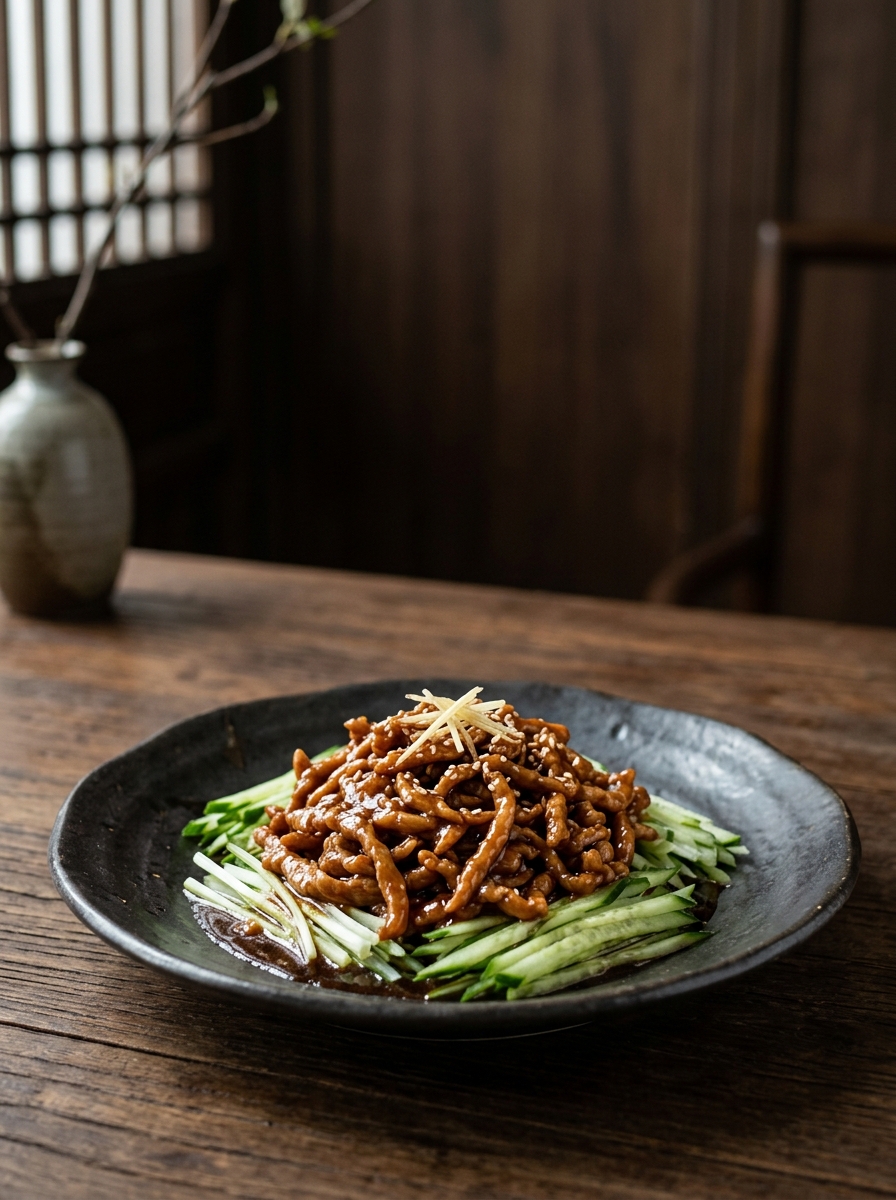
Home adaptation note: The report is one portion (200 g pork); quantities below are that portion. The Huaiyang change from the Beijing original — less sugar, less oil, more freshness — is the report's own framing and is kept here.
The Huaiyang version of this Beijing classic is defined by restraint. Sugar is cut back and oil is kept to twenty millilitres, so the sweet bean sauce tastes of the bean and the pork rather than of sweetness alone. The pork is cut six centimetres long and only three millimetres thick, coated with starch at a precise ratio, and marinated for just five minutes — longer and it starts to weep water. It is then slid through oil at about one hundred and sixty degrees for only thirty seconds, just until it changes colour, so it stays tender. The sauce itself is fried gently until it bubbles like fish eyes, the report's visual cue, and the pork goes back in for a ten-second high-heat toss. Cucumber and scallion are blanched for ten seconds and shocked in ice water, which keeps them crisp and bright while satisfying the report's rule that no garnish is served raw.
| Ingredient | US | Metric | Substitute / note |
|---|---|---|---|
| Pork tenderloin, cut into 6 cm shreds | 7 oz | 200 g | Tenderloin, per the report. |
| Cucumber, cut into fine shreds | 3.5 oz | 100 g | Blanch 10 seconds, shock in ice water. |
| Tofu skin (qianzhang), cut into 10 cm squares | 5.3 oz | 150 g | Scald 10 seconds; do not exceed 15 seconds or it tears. |
| Sweet bean sauce (tianmianjiang) | 2 tbsp | 30 g | — |
| Sugar | 2 tsp | 10 g | Less than the Beijing original, per the report. |
| Shaoxing wine | 2 tsp | 10 ml | For the marinade. |
| Corn starch, divided | 1 tbsp + 2 tsp | 20 g | 15 g for coating the pork, 5 g mixed with 20 ml water for the glaze. |
| Light soy sauce | 1 tsp | 5 ml | For the marinade. |
| Scallion, cut into shreds | 0.7 oz | 20 g | Blanch 10 seconds, shock, squeeze dry. |
| Neutral cooking oil | 1 tbsp + 1 tsp | 20 ml | — |
| Salt | A pinch | A pinch | Report says 'a little salt' without a quantity; amount is a home adaptation. |
The whole finish takes seconds: sauce bubbling on low heat, pork back in on high heat for ten seconds, glaze, out. Any longer and the shreds dry out and the pan starts to stick, which is exactly what the report warns against.
Too much starch, or too long a marinade. The report's ratio is 13 parts pork to 1 part starch, and the marinade must not exceed 10 minutes.
The sweet bean sauce was fried on too high a heat and the sugar scorched. Keep it low until it bubbles.
The report requires it for food safety and for crispness; raw garnish changes both the safety profile and the texture.
Best eaten fresh; the glaze softens on standing. Leftovers keep 1 day refrigerated; reheat gently until steaming hot. Keep tofu skin separate.
Tender pork shreds in sweet bean sauce over blanched cucumber, with tofu skin for wrapping.
Ingredients: 200 g pork tenderloin; 100 g cucumber; 150 g tofu skin; 30 g sweet bean sauce; 10 g sugar; 10 ml wine; 20 g corn starch; 5 ml light soy; 20 g scallion; 20 ml oil; pinch of salt.
Steps: 1) Marinate pork shreds 5 minutes. 2) Blanch cucumber, scallion and tofu skin 10 seconds each. 3) Slide pork 30 seconds at 160 °C. 4) Fry sauce on low heat until bubbling. 5) Toss pork 10 seconds, glaze, plate over cucumber.
Pork first simmered, then stir-fried with peppers and bean paste.
Cantonese roast pork with a sweet glazed edge.
Eggplant, potato and pepper in a garlicky home-style stir-fry.
Source note: ingredients, quantities and steps are adapted from the original ClouChef R&D report for 京酱肉丝淮扬版 (data/reports/159.md). The report's pricing, margin and marketing sections are deliberately omitted here; no B2B cost is presented as a home-cook cost. The pinch of salt in the marinade has no quantity in the report and is labelled as an adaptation.