Beijing Zhajiang Noodles
Wheat noodles topped with slow-fried black bean pork and crisp vegetable shreds.
← Home · Hakka rice steamed
Steamed glutinous rice with pork, dried mushrooms and dried shrimp — savoury, filling and warming. Adapted for a home kitchen from the original ClouChef R&D report — 客家糯米饭, report 144.
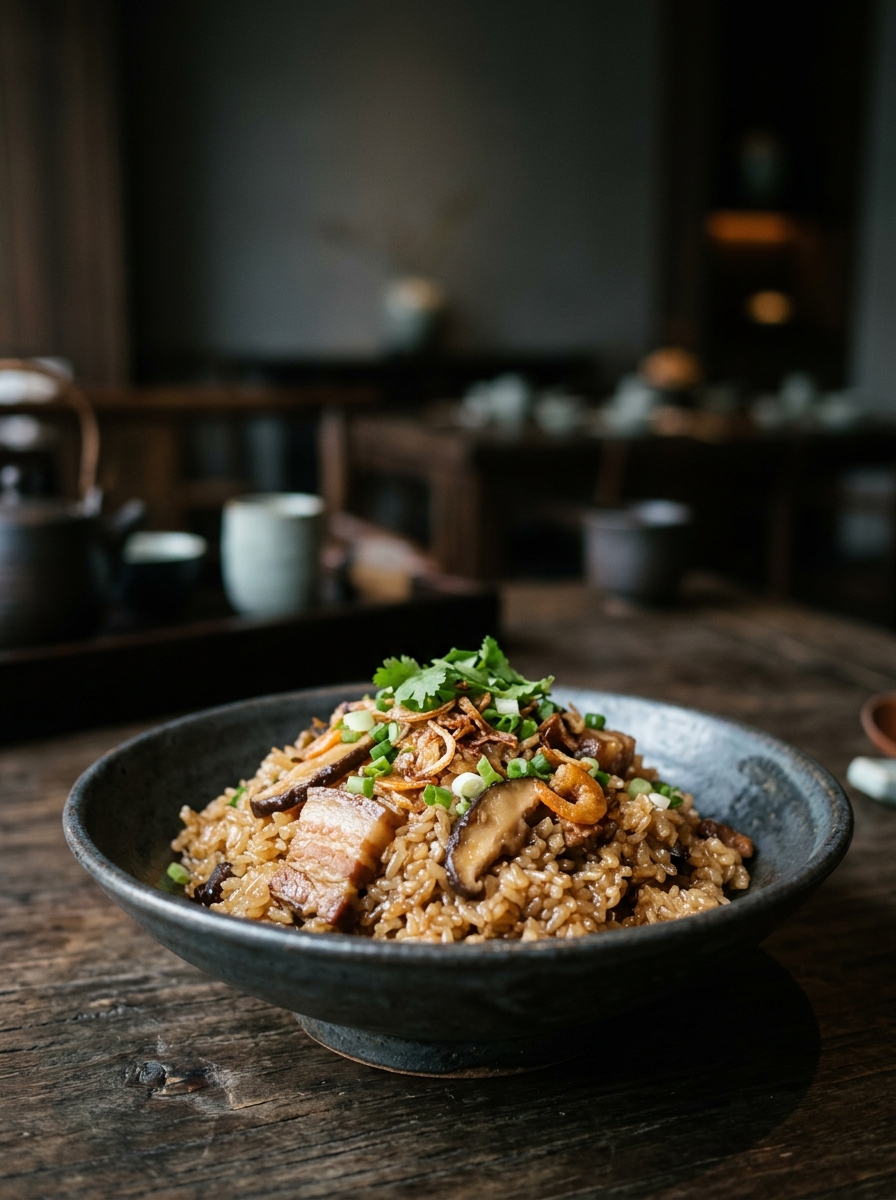
Sticky rice forgives almost nothing, so the report controls the variables one by one. The rice soaks for at least two hours in cold water — shorter and the grains stay hard in the middle, longer than four and they turn to mush — and the water added for steaming is measured to sit exactly level with the rice, no more. The flavour base is built separately: fatty pork dice rendered first until golden, so their fat carries the whole dish, then lean pork, rehydrated mushrooms and shrimp flash-fried with soy. Mixing that base through the soaked rice before steaming, rather than layering it on top, is what makes every grain taste seasoned instead of just the top layer. And the five-minute rest with the lid on after steaming is not optional: opening immediately leaves the surface dry and cracked while the centre is still catching up. Eaten hot, preferably with a simple soup or pickled vegetable on the side, it is filling enough to stand alone as a meal.
| Ingredient | US | Metric | Substitute / note |
|---|---|---|---|
| Glutinous rice (long-grain type) | 5.3 oz | 150 g | Long-grain glutinous rice stays springier than short-grain (from the report). |
| Pork belly, cut into 0.8 cm dice, fat and lean separated | 1.8 oz | 50 g | About 3:7 fat to lean, per the report. |
| Dried shiitake mushrooms | 0.2 oz | 5 g | Dry weight. Rehydrate in warm water for 30 minutes, then dice 0.5 cm. |
| Dried shrimp | 0.1 oz | 3 g | Soak in warm water for 10 minutes and drain. |
| Light soy sauce | 2 tsp | 10 ml | — |
| Salt | 1/3 tsp | 2 g | — |
| Neutral cooking oil | 1 tsp | 5 ml | — |
| Water, for steaming | about 3/4 cup | 200 ml | Level with the rice, not above it. |
| Scallion, chopped, to garnish | 1 tbsp | 10 g | — |
Three measurements carry this dish. Soak for 2–4 hours in cold water — under-soaked rice stays hard, over-soaked rice turns soft. Add steaming water exactly level with the rice, not above it, or the result is porridge. And rest the rice covered for at least 5 minutes after steaming, so the moisture equalises instead of drying the surface. If your steamer runs cool, extend the steaming time and check a grain from the centre before serving.
Almost always the soak was under 2 hours, or the steaming water sat below the rice level. Soak fully and measure the water to the rice surface.
The soak ran past 4 hours, or too much water was added. Keep the soak within 2–4 hours and the water level with the rice.
No — only glutinous rice gives the sticky, chewy texture. Ordinary rice will cook into a different, drier dish.
Best eaten hot from the steamer. Leftovers keep 2 days refrigerated; re-steam until steaming hot throughout to restore the texture — microwaving alone leaves it patchy. Do not reheat more than once. The rice can also be shaped and pan-fried the next day (adaptation).
Steamed glutinous rice with pork, mushrooms and shrimp, shaped and served hot.
Ingredients: 150 g glutinous rice; 50 g pork belly; 5 g dried shiitake; 3 g dried shrimp; 10 ml light soy; 2 g salt; 5 ml oil; 200 ml water; scallion to garnish.
Steps: 1) Soak rice 2 hours; rehydrate mushrooms 30 minutes and shrimp 10 minutes; dice pork. 2) Render fatty pork, fry lean pork, mushrooms and shrimp with soy and salt. 3) Mix through rice, add water level with rice, steam at 100 °C for 40 minutes. 4) Rest covered 5 minutes, shape, garnish, serve.
Wheat noodles topped with slow-fried black bean pork and crisp vegetable shreds.
Cantonese roast pork made in a home oven or air fryer, with a sticky, caramelised edge and no barbecue pit.
Sichuan fish fillet in a tingly, chilli-topped broth — made with fillet, not a whole fish.
Newsletter note: the signup form on the homepage is a static placeholder and does not collect or send anything.
Source note: ingredients, quantities and steps are adapted from the original ClouChef R&D report for 客家糯米饭 (data/reports/144.md). The report's pricing, margin and marketing sections are deliberately omitted here; no B2B cost is presented as a home-cook cost. Original poster image: clouchef.com (客家糯米饭_144.jpeg). Serving size for home use (1–2), the no-steamer method, the sausage option and the pan-fried-leftover idea are adaptations and are labelled as such.