Guobao Pork
Northeastern sweet-and-sour pork, fried crisp and coated in a bright, tangy glaze.
← Home · Jiangsu sweet-sour ribs
Pork spare ribs blanched, dusted in starch, fried golden at 180 °C, then tossed in a tomato, sugar and vinegar glaze at the fixed ratio of 5:4:3 — the sweet-sour rib classic. Adapted for a home kitchen from the original ClouChef R&D report — 糖醋排骨, report 108.
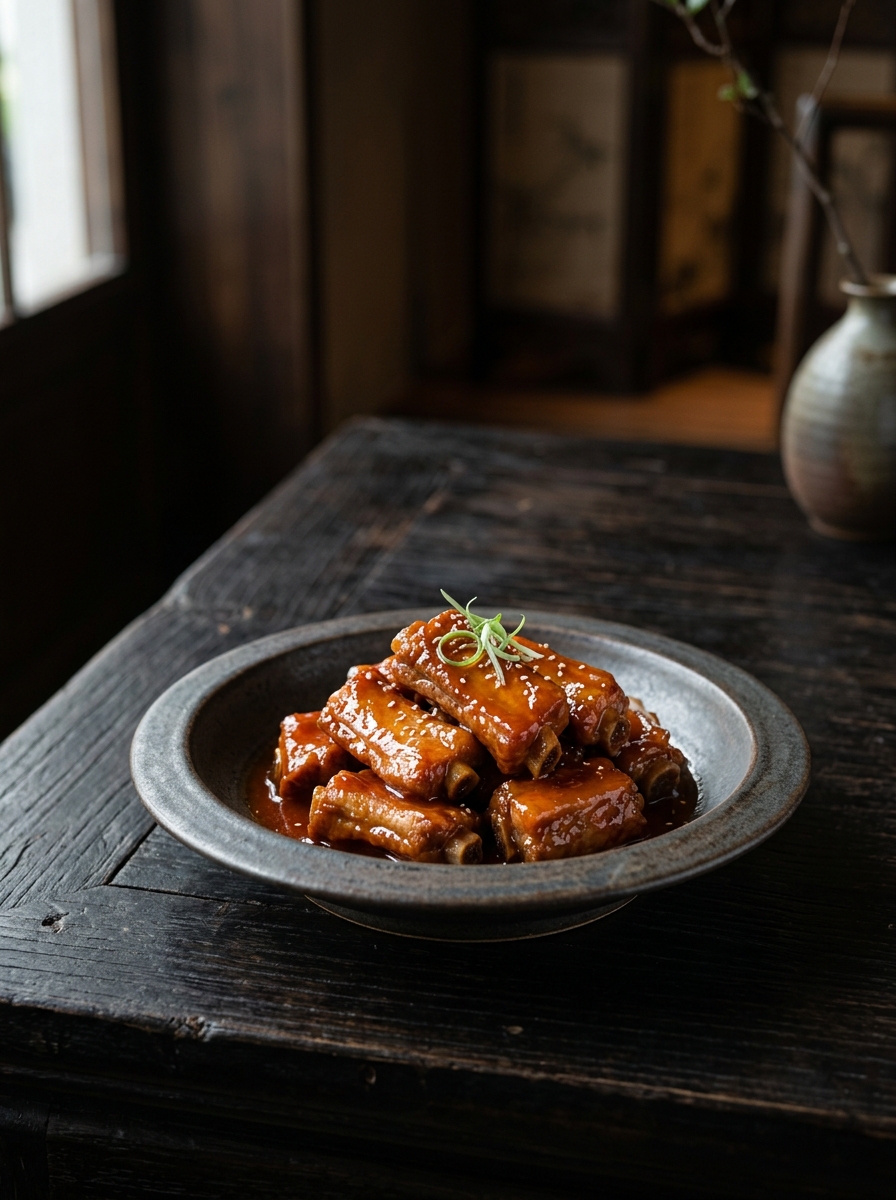
The glaze ratio is the recipe: tomato paste to sugar to vinegar at 5:4:3, and the report forbids changing it on the fly, because the balance is what keeps the dish sweet-sour rather than sweet or sour. The ribs are blanched first with ginger and cooking wine, which removes scum and gaminess, then dried thoroughly and dusted in dry starch — wet ribs make the coating slide off in the oil, dry ribs hold it. Frying at 180 °C for about three minutes crisps the outside while the inside finishes, and the rib centre must reach at least 74 °C. The final toss is fifteen to twenty seconds on high heat, no longer: the starch-thickened glaze is already reduced, so the ribs only need coating, and any longer in the pan turns the glaze from glossy to burnt and the crust from crisp to soggy. Serve with plain steamed rice to balance the glaze, and eat the ribs while the crust still has its edge.
| Ingredient | US | Metric | Substitute / note |
|---|---|---|---|
| Pork spare ribs, middle section | 1.1 lb | 500 g | Report quantity; serves 2 generously (adaptation: the report calls this a single 350 g finished serving, but 500 g raw ribs is a two-person home portion). |
| Tomato paste | 1¾ oz | 50 g | Fried to red oil before the other sauce ingredients go in. |
| White vinegar | 2 tbsp | 30 ml | Ratio tomato paste:sugar:vinegar 5:4:3, per the report. |
| Sugar | 1 tbsp + 2 tsp | 40 g | — |
| Salt | ½ tsp | 3 g | — |
| Corn starch, for dusting | 2 tbsp | 30 g | Dusted dry; shake off the excess. |
| Corn starch, for thickening | 2 tsp | 10 g | Mixed with 20 ml water. |
| Ginger slices, for blanching | A few slices | A few slices | Report gives no quantity. |
| Cooking wine, for blanching | A splash | A splash | Report gives no quantity; about 1 tablespoon (adaptation). |
| Neutral oil, for frying | About 3⅓ cups | 800 ml | Report quantity; only about 60 ml is consumed — the rest can be strained and reused for frying. |
| Neutral oil, for the sauce pan | 2 tsp | 10 ml | — |
Two mistakes dominate this dish: wet ribs and a long toss. Wet ribs shed their starch in the oil and fry patchy; ribs tossed longer than twenty seconds drink the glaze and lose their crust, and the sugar in the glaze burns quickly on high heat. Dry the ribs properly, have the glaze fully bubbling before the ribs go in, and count the toss — fifteen seconds is enough, twenty is the limit. If the oil drops below 175 °C, the ribs absorb oil instead of crisping; let it recover between batches.
To remove blood and scum, which would otherwise cloud the oil and leave a gamy taste.
Usually the ribs were still wet when dusted. Dry them thoroughly and shake off excess starch.
It will be sweeter and thinner than tomato paste; reduce the sugar if you do (adaptation).
Best eaten within minutes of glazing; the crust softens fast. Leftovers keep 1 day refrigerated; re-crisp in a hot oven or air fryer and toss with freshly made glaze. Do not freeze the finished dish.
Golden fried spare ribs in a glossy 5:4:3 sweet-sour glaze.
Ingredients: 500 g spare ribs; 50 g tomato paste; 40 g sugar; 30 ml vinegar; 3 g salt; 30 g starch (dusting); 10 g starch + 20 ml water (thickening); ginger and cooking wine for blanching; 800 ml frying oil (about 60 ml consumed); 10 ml oil for the sauce.
Steps: 1) Blanch ribs, dry, dust with starch. 2) Fry at 180 °C about 3 minutes. 3) Fry tomato paste to red oil, add vinegar, sugar, salt. 4) Toss ribs 15–20 seconds, thicken with starch, serve.
Northeastern sweet-and-sour pork, fried crisp and coated in a bright, tangy glaze.
Pork ribs braised with green beans and potatoes in a savoury sauce.
Slow-braised pork belly with rock sugar, in an Instant Pot or on the stove, with a glossy, savoury-sweet sauce.
Source note: ingredients, quantities and steps are adapted from the original ClouChef R&D report for 糖醋排骨 (data/reports/108.md). The report's pricing, margin and marketing sections are deliberately omitted here; no B2B cost is presented as a home-cook cost. The report's cost table counts the full frying-oil quantity as consumed while its own note says only a small fraction is consumed, so no cost figures are reproduced. The two-person serving presentation and the blanching quantities, not given in the report, are adaptations and are labelled as such. Original poster image: clouchef.com (糖醋排骨_108.jpeg).