Guobao Pork
Northeastern sweet-and-sour pork, fried crisp and coated in a bright, tangy glaze.
← Home · Shandong sweet-sour crispy
Pork tenderloin strips battered, fried twice until golden and crisp, then tossed for fifteen seconds in a bubbling tomato, sugar and vinegar glaze — the Shandong sweet-sour classic. Adapted for a home kitchen from the original ClouChef R&D report — 糖醋里脊, report 93.
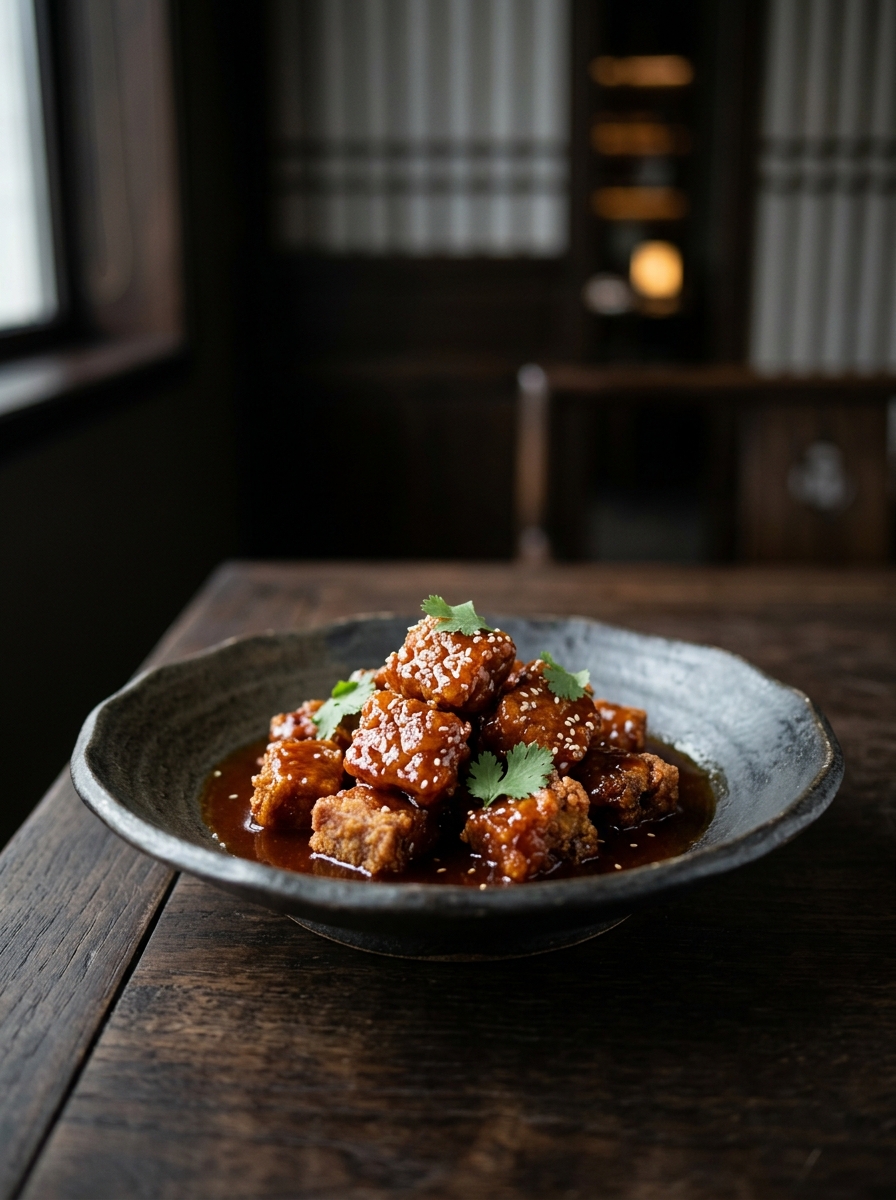
Crispness here is a race against the sauce, and the report's whole method is designed to win it. The strips are battered in two layers — a starch and egg-white slurry first, then a thick starch paste — so the coating is substantial enough to survive the glaze. They are fried twice: two minutes at 150 °C to cook through gently, then thirty seconds at 180 °C to drive off surface moisture and harden the crust. The glaze is reduced separately until it bubbles heavily and coats a spoon, so it is already thick before the pork ever touches it. Then comes the fifteen-second rule: toss, coat, and get it out of the pan. Any longer and the crust drinks the sauce and goes soft, which is why the glaze must be ready and the pork must be the last thing to go in. Served at once with plain rice, the pork should shatter faintly under the chopsticks before the sweet-sour glaze takes over.
| Ingredient | US | Metric | Substitute / note |
|---|---|---|---|
| Pork tenderloin, cut into strips 1 × 4 cm | 8.8 oz | 250 g | — |
| Salt | ½ tsp | 3 g | For marinating. |
| Cooking wine | 2 tsp | 10 ml | For marinating. |
| Scallion and ginger, for marinating | 0.35 oz each | 10 g each | Removed before battering. |
| Egg white | 1 egg white | 30 g | — |
| Corn starch, divided | About ½ cup | 50 g | 30 g in the slurry, 20 g in the thick paste. |
| Tomato paste | 4 tbsp | 60 g | Not ketchup — the report specifies tomato paste (adaptation note: ketchup makes it sweeter; reduce sugar if using it). |
| Sugar | 3 tbsp | 40 g | — |
| Fragrant vinegar, 9° | 4 tsp | 20 ml | Chinkiang black vinegar. |
| Neutral oil, for deep-frying | 2 cups | 500 ml | Report quantity; the oil can be strained and reused for frying. Only about 60 ml is absorbed. |
| White sesame or chopped scallion, to garnish | To taste | To taste | — |
The second fry is not optional garnish — it is what re-crisps a crust that softened while resting after the first fry, and it is the reason the pork survives contact with the glaze at all. Keep the oil temperature honest with a thermometer if you can: below 150 °C the batter drinks oil and goes greasy, above 180 °C on the second fry it darkens before it crisps. And have the glaze fully reduced before the pork goes in, because there is no time to fix a thin sauce during the fifteen seconds.
Usually the toss ran longer than fifteen seconds, or the glaze was not reduced enough before the pork went in.
You can, but the crust will be thinner and less crisp; spray the battered strips with oil first (adaptation).
The slurry seasons and sticks, the thick paste builds the crunch — one layer alone goes soggy faster.
Best eaten within minutes of tossing; the crust softens fast. Leftovers keep 1 day refrigerated; re-crisp the pork in a hot oven or air fryer and toss with freshly made glaze. Do not freeze the finished dish.
Twice-fried pork strips in a bright sweet-sour tomato glaze.
Ingredients: 250 g pork tenderloin; 3 g salt; 10 ml cooking wine; 10 g each scallion and ginger; 30 g egg white; 50 g corn starch; 60 g tomato paste; 40 g sugar; 20 ml vinegar; 500 ml frying oil (reusable).
Steps: 1) Marinate strips 10 minutes, batter in two layers. 2) Fry at 150 °C for 2 minutes, then at 180 °C for 30 seconds. 3) Reduce tomato paste, sugar and vinegar 1 minute. 4) Toss pork in glaze for 15 seconds, serve at once.
Northeastern sweet-and-sour pork, fried crisp and coated in a bright, tangy glaze.
Shrimp flash-fried in hot oil until the shells turn crisp and red, in a lightly sweet, savoury glaze.
Sichuan's famous sweet, sour, salty and tingly chicken — pan-fried, not deep-fried, with peanuts for crunch.
Source note: ingredients, quantities and steps are adapted from the original ClouChef R&D report for 糖醋里脊 (data/reports/93.md). The report's pricing, margin and marketing sections are deliberately omitted here; no B2B cost is presented as a home-cook cost. The report's own cost table is arithmetically wrong — one egg-white line is priced far above its own per-kilo rate, and its seasoning subtotal contradicts its stated total — so no cost figures are reproduced. The ketchup note is an adaptation and is labelled as such. Original poster image: clouchef.com (糖醋里脊_93.jpeg).