Oil-Blast Shrimp
Shrimp flash-fried in hot oil until the shells turn crisp and red, in a lightly sweet, savoury glaze.
← Home · Jiangsu Suzhou eel sizzling oil
Boneless eel shreds, blanched, tossed in sweet bean sauce, then finished with a pour of smoking oil over raw garlic — the sizzle is the signature. Adapted for a home kitchen from the original ClouChef R&D report — 响油鳝丝, report 35.
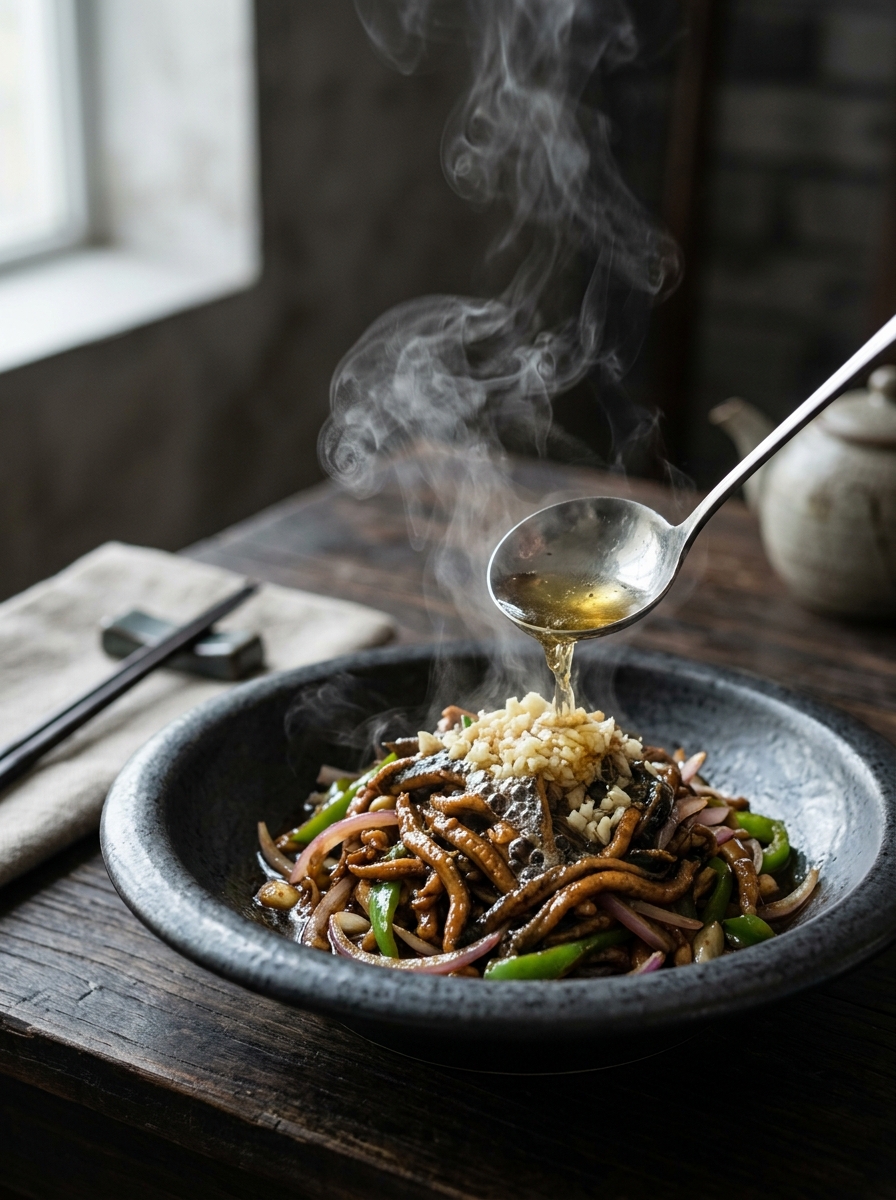
Everything in this dish happens fast, and the report's timings are unusually strict because eel goes from silky to tough in seconds. The shreds are marinated for two minutes, blanched for fifteen seconds only, then stir-fried for twenty seconds before the sauce goes in, so the whole wok stage is over in about a minute and the eel never has time to dry out. Sweet bean sauce, sugar and wine give a savoury-sweet base that is deep rather than spicy, and onion and green pepper, cut to the same fine shreds, cook in fifteen seconds so they stay crisp against the soft eel. The final act is theatre with a purpose: oil heated until it smokes, around two hundred and thirty degrees, poured over garlic left raw on top, so the garlic blooms instantly in the heat without ever frying to bitterness. Do the sizzle at the table if you can, and warn guests to keep their hands back.
| Ingredient | US | Metric | Substitute / note |
|---|---|---|---|
| Boneless eel shreds | 7.1 oz | 200 g | Buy eel already boned and shredded if possible; preparing live eel at home is a specialist job (adaptation). |
| Onion, in fine shreds | 1.8 oz | 50 g | Cut about 0.3 cm wide. |
| Green pepper, in fine shreds | 1.1 oz | 30 g | Cut about 0.3 cm wide. |
| Sweet bean paste | 0.9 oz | 25 g | Tianmianjiang from an Asian grocery; no true Western substitute. |
| Garlic, minced | 0.7 oz | 20 g | Half for frying, half reserved raw for the sizzle. |
| Ginger, minced | 0.35 oz | 10 g | Minced to rice-grain size. |
| Cooking wine | 1 tbsp | 15 ml | Shaoxing wine. |
| Sugar | 1½ tsp | 8 g | — |
| Fragrant vinegar | 1 tsp | 5 ml | Chinkiang or rice vinegar (adaptation). |
| Mixed oil (rapeseed and lard) | 2 tbsp + 2 tsp | 40 ml | 30 ml for frying, 10 ml for the sizzle; neutral oil plus a little lard works (adaptation). |
| White pepper | ¼ tsp | 2 g | — |
The raw garlic on top must meet oil at about 230 °C — cooler oil just makes it greasy, hotter oil burns it bitter in a second. That is why the garlic is split: half fried at the start for base aroma, half left raw for the pour. And the eel's total heat exposure is under a minute after blanching; respect the report's seconds, not your instinct to cook it longer.
It is hot oil poured at the table, so keep hands, faces and sleeves clear and pour from a low, steady height. Children should not do this step.
More than twenty seconds makes it old and tough, and less than ten leaves fishiness; fifteen seconds is the report's control point.
Blanch the eel up to a day ahead and chill it, per the report's prep note; do the frying and sizzle just before serving.
Best eaten immediately, while the sizzle is still audible. Leftovers keep 1 day refrigerated; reheat until steaming hot — the sizzle cannot be repeated. Do not freeze.
Eel shreds in sweet bean sauce, finished with smoking oil poured over raw garlic.
Ingredients: 200 g eel shreds; 50 g onion; 30 g green pepper; 25 g sweet bean paste; 20 g garlic; 10 g ginger; 15 ml cooking wine; 8 g sugar; 5 ml vinegar; 40 ml mixed oil; 2 g white pepper.
Steps: 1) Marinate 2 minutes. 2) Blanch 15 seconds. 3) Fry aromatics and eel 20 seconds. 4) Sauce, add vegetables, plate, top with raw garlic and pour smoking oil.
Shrimp flash-fried in hot oil until the shells turn crisp and red, in a lightly sweet, savoury glaze.
Sichuan fish fillet in a tingly, chilli-topped broth — made with fillet, not a whole fish.
Gently poached chicken, chilled for a firm, silky texture, served with a ginger-scallion dip.
Source note: ingredients, quantities and steps are adapted from the original ClouChef R&D report for 响油鳝丝 (data/reports/35.md). The report's pricing, margin and marketing sections are deliberately omitted here; no B2B cost is presented as a home-cook cost. Home servings (1–2, from one 300 g restaurant portion) and the pre-boned eel and oil substitutes are adaptations and are labelled as such. Original poster image: clouchef.com (响油鳝丝_35.jpeg).