Lamb Noodle Soup
Henan-style lamb soup noodles with a clear, warming broth and hand-pulled noodles.
← Home · Beijing hotpot communal
Paper-thin lamb swished for seconds in a clear broth over a copper-style pot, eaten with a sesame, fermented bean-curd and chive-flower dip, then finished with cabbage, tofu and noodles in the same pot. Adapted for a home kitchen from the original ClouChef R&D report — 老北京涮羊肉锅子, report 86.
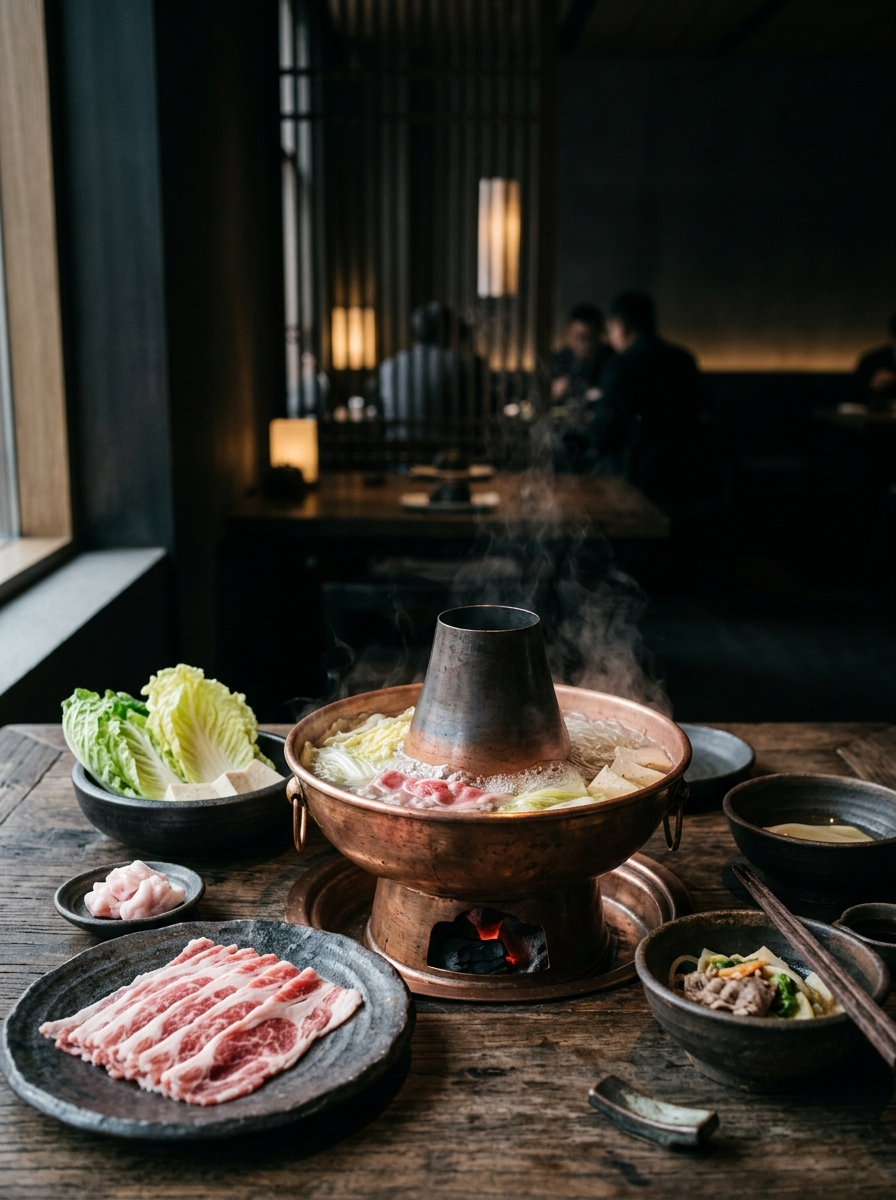
Old Beijing hotpot is deliberately plain where other hotpots are busy: the broth is just water, so nothing competes with the lamb, and all the flavour lives in the dip. That plainness is why the lamb must be sliced at 1.5 mm — thin enough to cook in five to eight seconds, thick enough not to shred — and why the lamb tail fat goes in first, blooming for thirty seconds until its oil floats, which seasons the broth and stops the slices sticking. The order matters as much as the slicing: lamb first, while the broth is clean, then cabbage, tofu and noodles, which soak up everything the lamb left behind. The dip is mixed 3:1 sesame paste to warm water before the bean curd and chive flower go in; mixed dry, the paste seizes into lumps no amount of stirring will fix. At the table, small batches and frequent dipping keep the meal paced and social rather than rushed.
| Ingredient | US | Metric | Substitute / note |
|---|---|---|---|
| Fresh lamb leg, sliced 1.5 mm | 7 oz | 200 g | Freeze until semi-firm (about −5 °C) before slicing; a butcher can slice it for you (adaptation). |
| Lamb tail fat, sliced | 1.8 oz | 50 g | If unavailable, use a tablespoon of lamb fat or neutral oil to slick the pot (adaptation). |
| Napa cabbage, torn by hand | 10.5 oz | 300 g | Torn into 5 cm pieces, not cut — torn edges absorb broth better. |
| Firm tofu, cut into 1 cm slices | 7 oz | 200 g | — |
| Dried mung-bean vermicelli | 1.8 oz | 50 g | Soaked 30 minutes in cold water — never hot water, which makes it mushy. |
| Sesame paste | 1¾ oz | 50 g | — |
| Warm water, for thinning the paste | About 1 tbsp | 17 ml | Sesame paste to water 3:1, per the report. |
| Fermented bean curd liquid | 4 tsp | 20 g | — |
| Chive flowers (jiucaihua) | 0.5 oz | 15 g | Pickled chive-flower paste from an Asian grocery. |
| Water, for the pot | 6⅓ cups | 1500 ml | Plain water, per the report — no stock. |
At 1.5 mm the slices cook in seconds, so the window between done and tough is tiny: lift them the moment the last pink disappears, and never dump the whole plate in at once, or the broth cools and the slices stew grey. Keep the broth boiling between batches, and skim any scum so the later vegetables cook in a clean pot. If the dip tastes stiff, it needs more warm water, added a spoonful at a time — cold water makes sesame paste seize.
No — any pot that keeps the broth boiling at the table works; the copper pot is tradition, not a requirement.
So the lamb's flavour stays clean and the dip carries the seasoning; a stocked broth would muddy both.
Usually slices thicker than about 1.7 mm, or left in the pot longer than eight seconds. Slice thin and lift promptly.
Best eaten at the table as cooked. Leftover cooked lamb and vegetables keep 1 day refrigerated; reheat until steaming hot. Do not keep leftover broth with raw meat in it, and do not freeze the dipped lamb.
Paper-thin lamb swished in clear broth with a sesame dip, finished with cabbage, tofu and noodles.
Ingredients: 200 g lamb leg; 50 g lamb tail fat; 300 g cabbage; 200 g tofu; 50 g vermicelli; dip: 50 g sesame paste, 17 ml warm water, 20 g fermented bean-curd liquid, 15 g chive flowers; 1500 ml water.
Steps: 1) Slice lamb 1.5 mm; mix dip. 2) Boil water, bloom tail fat 30 seconds. 3) Swish lamb 5–8 seconds per batch. 4) Cook cabbage, tofu and noodles 3–5 minutes.
Henan-style lamb soup noodles with a clear, warming broth and hand-pulled noodles.
Warming winter stew of lamb and radish in a chilli-spiced broth.
Slow-braised pork belly with rock sugar, in an Instant Pot or on the stove, with a glossy, savoury-sweet sauce.
Source note: ingredients, quantities and steps are adapted from the original ClouChef R&D report for 老北京涮羊肉锅子 (data/reports/86.md). The report's pricing, margin and marketing sections are deliberately omitted here; no B2B cost is presented as a home-cook cost. The butcher-slicing shortcut, the tail-fat substitute and the non-charcoal pot are adaptations and are labelled as such. Original poster image: clouchef.com (老北京涮羊肉锅子_86.jpeg).