Oil-Blast Shrimp
Shrimp flash-fried in hot oil until the shells turn crisp and red, in a lightly sweet, savoury glaze.
← Home · Shandong shrimp sweet-sour
Head-on shrimp seared until the shells blush red, then braised three minutes in a tomato, sugar and vinegar glaze until the sauce clings — Shandong's celebratory red-cooked shrimp. Adapted for a home kitchen from the original ClouChef R&D report — 油焖大虾, report 92.
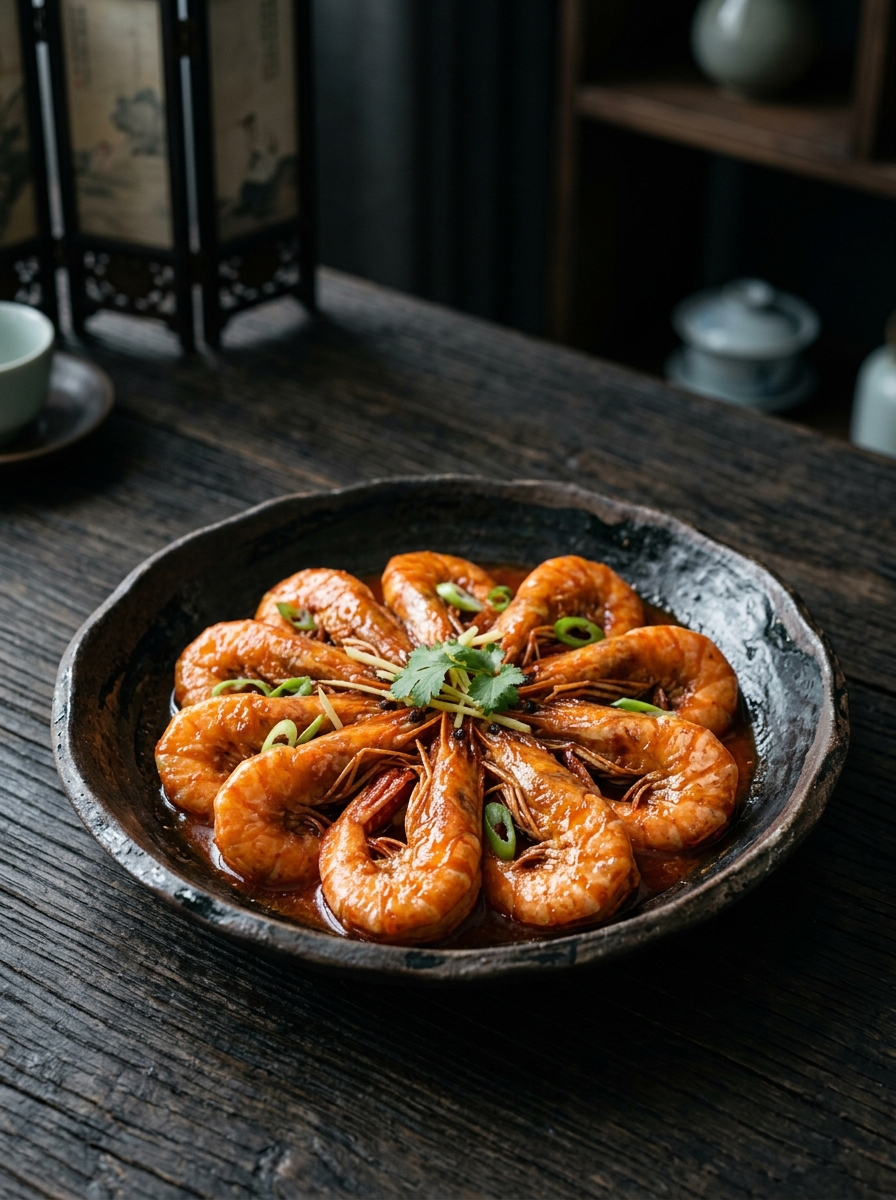
The dish works because the shrimp are cooked twice for different reasons: a one-minute sear at 180 °C reddens the shells and firms the flesh, and a three-minute covered braise then lets the sweet-sour sauce soak in without overcooking them. Tomato paste fried in the residual oil until it releases its red oil is what gives the glaze its colour and depth — raw tomato paste tastes flat and tinny, fried paste tastes rich. Sugar and vinegar at 2:1 is the fixed ratio: sweeter and the dish cloys, sharper and it stings. The final twenty-second high-heat reduction with water starch is the whole finish — it turns a braising liquid into a coating, and the spoonful of bright oil at the end is what makes the shrimp shine on the plate instead of looking matte and dry. Served with plain steamed rice, the shrimp need nothing else: the glaze is rich enough to season the rice it touches.
| Ingredient | US | Metric | Substitute / note |
|---|---|---|---|
| Large shrimp, head on | 7 oz | 200 g | Butterflied, deveined, whiskers and rostrum trimmed. |
| Tomato paste | 2 tbsp | 30 g | — |
| Sugar | 4 tsp | 20 g | Sugar to vinegar 2:1, per the report. |
| Fragrant vinegar | 2 tsp | 10 g | Chinkiang black vinegar. |
| Cooking wine | 2 tsp | 10 g | Half for marinating, half for the sauce. |
| Salt | ¼ tsp | 2 g | 1 g for marinating, the rest for the sauce. |
| Scallion segments and ginger slices | 0.35 oz | 10 g | — |
| Corn starch, for thickening | 1 tsp | 5 g | Mixed with 10 g water. |
| Stock or water | 3½ tbsp | 50 g | — |
| Neutral oil | 2 tbsp | 30 g | Plus 5 g bright oil to finish. |
| Scallion, chopped, to garnish | To taste | To taste | — |
The butterfly cut matters twice: it lets the sauce into the flesh during the short braise, and it makes the shrimp curl evenly instead of twisting. Do not extend the braise to 'get more flavour' — shrimp go rubbery fast, and three minutes is already the maximum. If the sauce looks thin after the starch, it needed a hotter pan, not more starch; if it looks gluey, the starch went in before the pan was hot enough to set it.
So the sauce penetrates and the shrimp cook evenly; a whole shrimp stays bland inside and curls unevenly.
Almost always a braise longer than three minutes, or a sear longer than one minute. Both stages are short by design.
Yes — thaw fully and pat very dry first, or the sear will steam instead of reddening the shells (adaptation).
Best eaten fresh; shrimp toughen on reheating. Leftovers keep 1 day refrigerated; reheat very gently until just steaming hot. Do not freeze the finished dish.
Head-on shrimp braised in a sweet-sour tomato glaze until glossy.
Ingredients: 200 g large shrimp; 30 g tomato paste; 20 g sugar; 10 g vinegar; 10 g cooking wine; 2 g salt; 10 g scallion and ginger; 5 g starch + 10 g water; 50 g stock; 30 g oil + 5 g bright oil.
Steps: 1) Butterfly, devein, marinate 5 minutes. 2) Sear at 180 °C for 1 minute. 3) Fry tomato paste to red oil, add sauce, braise covered 3 minutes. 4) Reduce with starch 20 seconds, finish with bright oil.
Shrimp flash-fried in hot oil until the shells turn crisp and red, in a lightly sweet, savoury glaze.
Northeastern sweet-and-sour pork, fried crisp and coated in a bright, tangy glaze.
Pork ribs braised with green beans and potatoes in a savoury sauce.
Source note: ingredients, quantities and steps are adapted from the original ClouChef R&D report for 油焖大虾 (data/reports/92.md). The report's pricing, margin and marketing sections are deliberately omitted here; no B2B cost is presented as a home-cook cost. Original poster image: clouchef.com (油焖大虾_92.jpeg).