Satay Beef with Gai Lan
Tender beef slices in sweet-salty satay sauce, served over crisp gai lan — a quick stir-fry.
← Home · Shanghai shrimp quick
Shrimp flash-fried in hot oil until the shells turn crisp and red, in a lightly sweet, savoury glaze. Adapted for a home kitchen from the original ClouChef R&D report — 油爆虾, report 164.
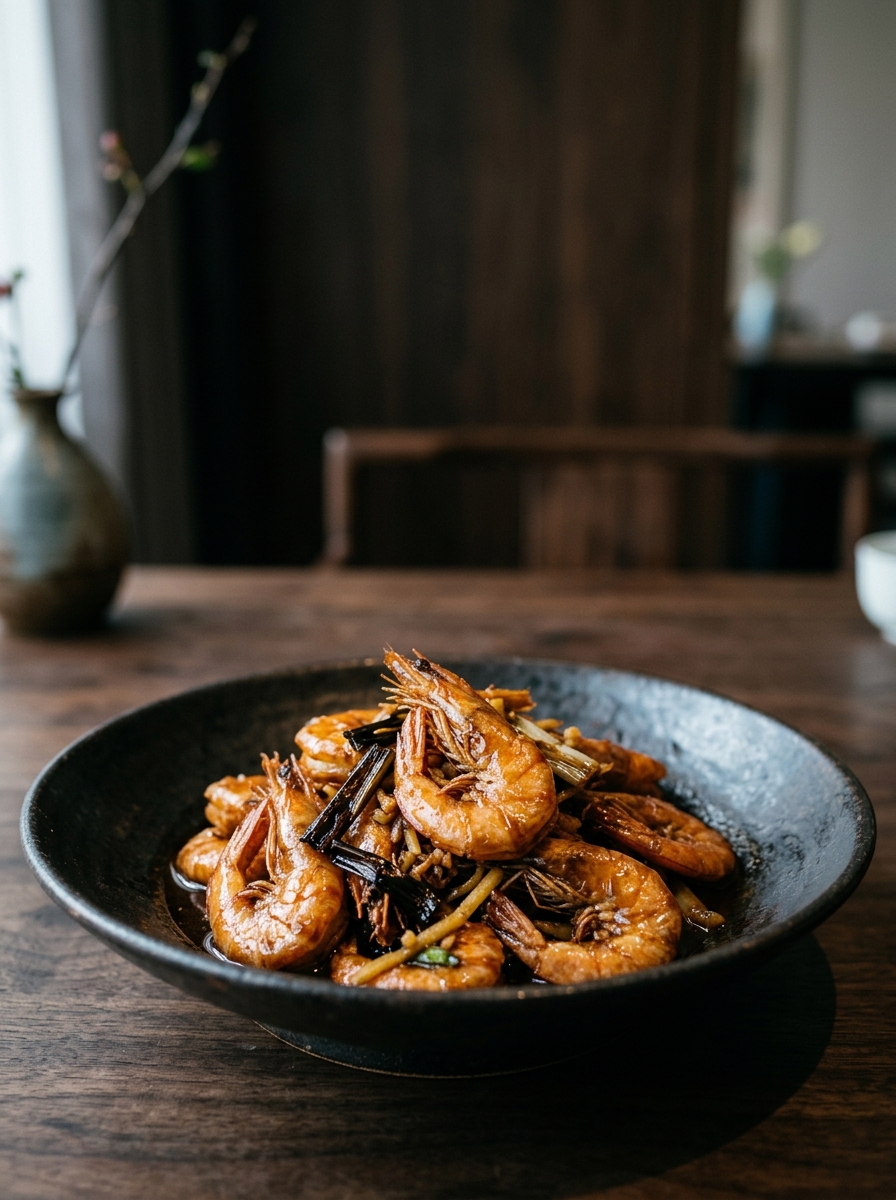
Oil-blast shrimp is a ten-second dish, and every preparation step exists to protect those ten seconds. The shrimp must be completely dry before they meet the oil, because surface water turns a flash-fry into a spattering boil and drops the temperature. The oil must be at 180–190 °C, hot enough that the shells crisp and redden almost instantly, and the shrimp must come out within 12 seconds at the latest, while the meat inside is still tender. After that, speed matters again: ginger and scallion get 20 seconds to perfume the base oil, wine goes in around the edge of the pan so it flashes off and carries away any fishiness, and the whole saucing — soy, sugar, toss — is finished in 5–8 seconds, for a total saucing time under 45 seconds. Leave it a moment longer and the glaze dries out, the shells soften, and the dish you just raced to make is gone.
| Ingredient | US | Metric | Substitute / note |
|---|---|---|---|
| Fresh river shrimp, whole and shell-on, 3–4 cm each | 5.3 oz | 150 g | Small whole shell-on shrimp or prawns are the substitute (adaptation). Trim whiskers and rostrum, rinse twice, and drain thoroughly. |
| Scallion, in two parts | 0.5 oz | 15 g | 10 g cut into 3 cm sections for blooming; 5 g cut into flower garnish, which must be fully cooked (see steps). |
| Ginger, sliced | 2 tsp | 10 g | — |
| Yellow wine (Shaoxing) | 1 tbsp + 1 tsp | 20 ml | Poured around the edge of the hot pan so it flashes off. |
| Light soy sauce | 2 tsp | 10 ml | — |
| Sugar | 2 tsp | 8 g | Balances the salt and gives the glaze its shine. |
| Neutral oil, for deep-frying | 2 cups | 500 ml | Only about 40 ml is actually lost per batch (from the report); strain and reuse for frying (adaptation). |
| Neutral oil, for the base | 1 tbsp | 15 ml | — |
The report's tolerances are tight on purpose: oil at 180–190 °C, shrimp in for 10 seconds plus or minus 2, and the whole saucing finished within 45 seconds. Cooler oil leaves soft shells; longer frying makes the meat tough and the shells hard; longer saucing dries the glaze and squeezes moisture from the shrimp. Dry shrimp are a safety matter too — water in hot oil spatters. Check a shrimp's centre reaches at least 70 °C (from the report).
The oil was probably below 180 °C, or the shrimp were wet going in. Dry them thoroughly and wait for the oil to just smoke.
The fry ran past 12 seconds, or the saucing dragged on. Both stages are measured in seconds, not minutes.
Yes if fully thawed and dried very well (adaptation). Any surface water will spatter dangerously in 190 °C oil.
Best eaten immediately, while the shells are crisp and the glaze is glossy. The report advises against holding this dish: the sauce fades fast. Leftovers keep 1 day refrigerated; reheat gently until steaming throughout and expect soft shells. Do not reheat more than once.
Flash-fried shell-on shrimp in a lightly sweet, savoury glaze.
Ingredients: 150 g whole shrimp; 15 g scallion; 10 g ginger; 20 ml yellow wine; 10 ml light soy; 8 g sugar; 500 ml frying oil; 15 ml base oil.
Steps: 1) Trim, rinse and dry shrimp completely; cook the scallion flower garnish. 2) Fry at 180–190 °C for 10 seconds, drain. 3) Bloom ginger and scallion sections 20 seconds. 4) Add shrimp, wine around the pan edge, soy and sugar, toss 5–8 seconds, plate at once.
Tender beef slices in sweet-salty satay sauce, served over crisp gai lan — a quick stir-fry.
Eggplant, potato and green pepper, fried then tossed in a savoury sauce — a classic Northeastern home dish.
Steamed glutinous rice with pork, dried mushrooms and dried shrimp — savoury, filling and warming.
Newsletter note: the signup form on the homepage is a static placeholder and does not collect or send anything.
Source note: ingredients, quantities and steps are adapted from the original ClouChef R&D report for 油爆虾 (data/reports/164.md). The report's pricing, margin and marketing sections are deliberately omitted here; no B2B cost is presented as a home-cook cost. Original poster image: clouchef.com (油爆虾_164.jpeg). Serving size for home use (1–2), the shrimp substitute, the smaller-pot frying note and the frozen-shrimp note are adaptations and are labelled as such.