Lamb Noodle Soup
Clear lamb broth with hand-pulled noodles and tender lamb — a warming northern bowl.
← Home · Guangxi sour-spicy noodles
Dried rice noodles in a snail broth with pickled bamboo shoots, perilla and chilli oil, finished with crisp fried bean curd and peanuts. Adapted for a home kitchen from the original ClouChef R&D report — 螺蛳粉, report 193.
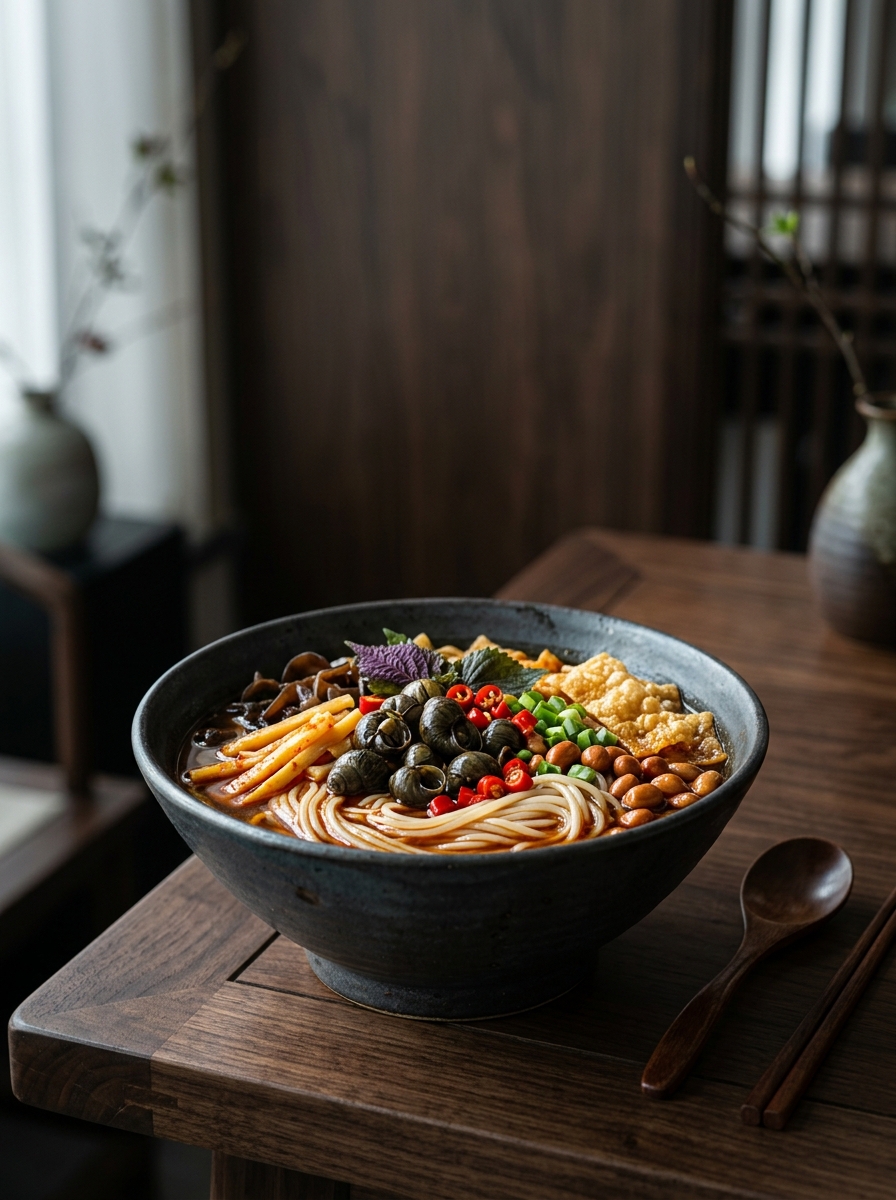
Luosifen is a dish people either love instantly or approach with caution, and the report does not try to soften it: the sourness comes from pickled bamboo, the heat from chilli oil, and the distinctive funk from the snail broth itself. The home version leans on two conveniences the report already assumes — a bottled snail-soup concentrate and frozen snail meat — so the long part of the recipe is just soaking the noodles, four hours in cold water or thirty minutes in hot water. Once the broth is built, the final cooking takes under three minutes. The report's own sequence — fry the bamboo thirty seconds, boil the noodles ninety seconds, stir the perilla five seconds, toppings last — is a countdown, not a suggestion. Served immediately, with the toppings still crisp against the hot, sour broth, it is one of China's most divisive and most craveable noodle soups.
| Ingredient | US | Metric | Substitute / note |
|---|---|---|---|
| Dried rice noodles | 5.3 oz | 150 g | Soak 4 hours in cold water or 30 minutes in hot water. |
| Frozen snail meat | 1.8 oz | 50 g | — |
| Snail soup concentrate | 3.4 fl oz | 100 ml | Bottled luosifen soup base from a Chinese grocery; the report's concentrate is a commercial product (adaptation note). |
| Pickled bamboo shoots (suan sun) | 1 oz | 30 g | The source of the signature sourness; rinse if very strong. |
| Perilla leaves | 0.2 oz | 5 g | — |
| Chilli oil | 4 tsp | 20 ml | Part for frying, part to drizzle at serving. |
| Fried bean curd and peanuts, for topping | 1 oz | 30 g | Keep crisp; add only at the end. |
| Cooking oil, salt and sugar | To taste | 10 ml oil, 5 g salt and sugar to taste | Report gives these combined with no split; season the broth to taste (adaptation). |
| Water, for the broth | To taste | To taste | Report mixes concentrate with water at 1:5 for the base; about 200 ml of prepared broth is used for the final bowl. |
Luosifen's timing is unforgiving because every element peaks at a different second. Noodles need ninety seconds — shorter and they are chalky, longer and they are mush. Perilla needs five seconds — earlier and it discolours and loses its scent. Toppings need zero seconds in the pot — they go in after the heat is off, or they soak and soften. The broth, by contrast, is made in advance and only reheated, which is why this is a fast dish once the base exists.
Chinese groceries sell bottled luosifen soup base; a full luosifen kit is an easier substitute (adaptation).
The pickled bamboo and snail broth are the signature aroma; it is normal and much milder once eaten with the noodles.
Yes, but reduce the cooking time to about 1 minute and check for springiness, since fresh noodles cook faster (adaptation).
Best eaten immediately. The prepared broth base keeps 3 days refrigerated; cooked noodles do not keep well. Do not freeze the finished bowl.
Rice noodles in sour-spicy snail broth with pickled bamboo, perilla and crisp toppings.
Ingredients: 150 g dried rice noodles; 50 g frozen snail meat; 100 ml snail soup concentrate; 30 g pickled bamboo; 5 g perilla; 20 ml chilli oil; 30 g fried bean curd and peanuts; oil, salt and sugar to taste.
Steps: 1) Soak noodles. 2) Make snail broth base 15 minutes. 3) Fry bamboo 30 seconds, cook noodles 90 seconds. 4) Perilla 5 seconds, top and serve.
Clear lamb broth with hand-pulled noodles and tender lamb — a warming northern bowl.
Shanghai-style noodles tossed in fragrant scallion oil and soy — fifteen minutes, pantry ingredients, big flavour.
Crisp bean sprouts tossed with slippery glass noodles in a light, savoury dressing.
Source note: ingredients, quantities and steps are adapted from the original ClouChef R&D report for 螺蛳粉 (data/reports/193.md). The report's pricing, margin and marketing sections are deliberately omitted here; no B2B cost is presented as a home-cook cost. The bottled soup-base sourcing, oil-salt-sugar split and fresh-noodle note are home adaptations and are labelled as such. Original poster image: clouchef.com (螺蛳粉_193.jpeg).