Oil-Blast Shrimp
Shrimp flash-fried in hot oil until the shells turn crisp and red, in a lightly sweet, savoury glaze.
← Home · Cantonese lobster noodles banquet
Steamed lobster meat over yi noodles that have drunk a broth made from the lobster's own shells, with softly scrambled egg white. Adapted for a home kitchen from the original ClouChef R&D report — 龙虾伊面, report 23.
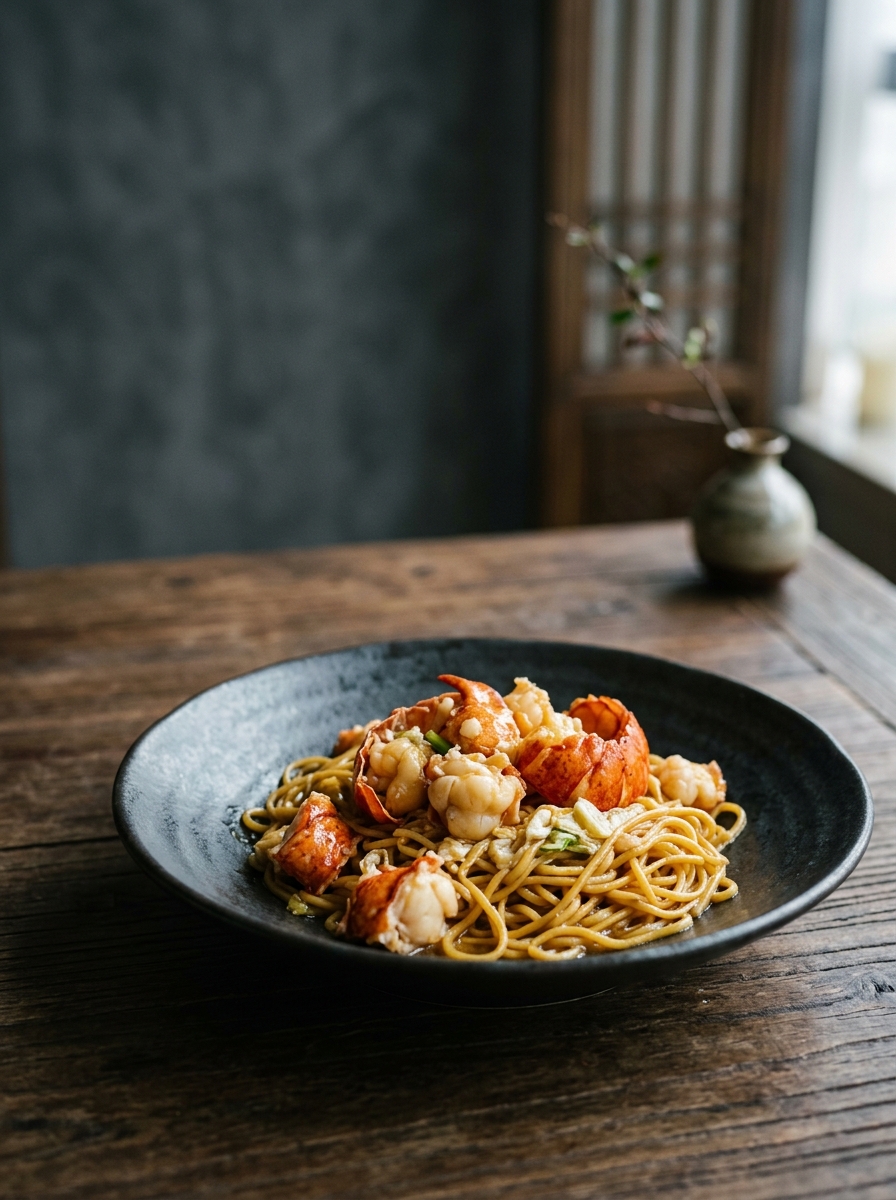
This is a dish built on thrift disguised as luxury: the shells, which most cooks throw away, become the broth that gives the noodles their flavour, and the noodles in turn become the vehicle that carries lobster taste to every bite. Steaming the lobster first — five to six minutes, no more — cooks it gently enough to shell cleanly, and an ice bath firms the meat so it can be reheated later without turning rubbery. Frying the shells in butter and simmering them in stock for ten minutes extracts a sweet, coral-tinted broth that the yi noodles then absorb over three minutes of cooking, reducing to a third of its volume. The final thirty-second reheat of lobster and egg white in boiling broth is deliberately brief: both are already cooked, and all they need is to be hot, not cooked again. Serve it immediately, while the noodles are still glossy and the lobster is at its most tender.
| Ingredient | US | Metric | Substitute / note |
|---|---|---|---|
| Live lobster (Boston or spiny), in shell | 14 oz | 400 g | One lobster; the report allows Boston or flower lobster. Frozen lobster tails work if fresh is unavailable (adaptation). |
| Dried yi noodles (e-fu noodles) | 3.5 oz | 100 g | From an Asian grocery; they are pre-fried, which is why they absorb broth without breaking. |
| Egg whites | 2 whites | 60 g | — |
| Rich stock | About ¾ cup + extra | 200 ml | Chicken or seafood stock; plus 50 ml for the final reheat. |
| Oyster sauce | 1 tbsp | 15 g | — |
| Light soy sauce | 2 tsp | 10 ml | — |
| Sugar | ½ tsp | 3 g | — |
| Butter (optional) | 2 tsp | 10 g | For frying the shells; omit for a cleaner broth (adaptation). |
| Neutral cooking oil | 1 tsp | 5 ml | For scrambling the egg white; the report says 'hot pan, cold oil'. |
Lobster meat alone cannot flavour a noodle dish — there is too little of it and it cooks too fast. The shells, fried and simmered, carry the sweet marine compounds that the meat only hints at, and yi noodles, being pre-fried, are porous enough to drink that broth without disintegrating. That is why the noodles are cooked only to seventy percent first: the last thirty percent happens in the broth, which is where the flavour enters.
Steaming cooks it evenly and lets you shell it cleanly; cooking it in the broth would overcook it long before the noodles absorbed anything.
E-fu noodles: wheat noodles pre-fried and dried, so they puff and absorb broth quickly. Regular dried egg noodles absorb more slowly and may break.
Yes — thaw fully, steam briefly (about 3 minutes, since it may be part-cooked), and proceed; the shell broth will be a little lighter.
Best eaten fresh. Leftovers keep 1 day refrigerated; reheat the noodles and lobster separately until steaming hot, accepting softer noodles. Do not freeze the finished dish.
Steamed lobster over yi noodles in a shell broth, with scrambled egg white.
Ingredients: 400 g live lobster; 100 g dried yi noodles; 60 g egg whites; 200 ml stock (+ 50 ml for reheating); 15 g oyster sauce; 10 ml soy sauce; 3 g sugar; 10 g butter (optional); 5 ml oil.
Steps: 1) Steam lobster 5–6 minutes, shell, keep shells. 2) Boil noodles 2 minutes; scramble egg white. 3) Simmer shells in stock 10 minutes, strain. 4) Cook noodles in broth 3 minutes. 5) Reheat lobster and egg white 30 seconds, assemble.
Shrimp flash-fried in hot oil until the shells turn crisp and red, in a lightly sweet, savoury glaze.
Shanghai-style noodles tossed in fragrant scallion oil and soy — fifteen minutes, pantry ingredients, big flavour.
Cantonese roast pork made in a home oven or air fryer, with a sticky, caramelised edge and no barbecue pit.
Source note: ingredients, quantities and steps are adapted from the original ClouChef R&D report for 龙虾伊面 (data/reports/23.md). The report's pricing, margin and marketing sections are deliberately omitted here; no B2B cost is presented as a home-cook cost. The report's ingredient total and its cost summary disagree slightly, so no cost figures are reproduced. The frozen-lobster and steamer alternatives are adaptations and are labelled as such. Original poster image: clouchef.com (龙虾伊面_23.jpeg).