Spicy Boiled Fish
Sichuan fish fillet in a tingly, chilli-topped broth — made with fillet, not a whole fish.
← Home · Guangxi sour-spicy fish
Pan-fried snakehead chunks braised briefly in a sour-spicy laoyou sauce of pickled bamboo shoots, fermented black beans and a ready-made laoyou paste. Adapted for a home kitchen from the original ClouChef R&D report — 老友鱼, report 191.
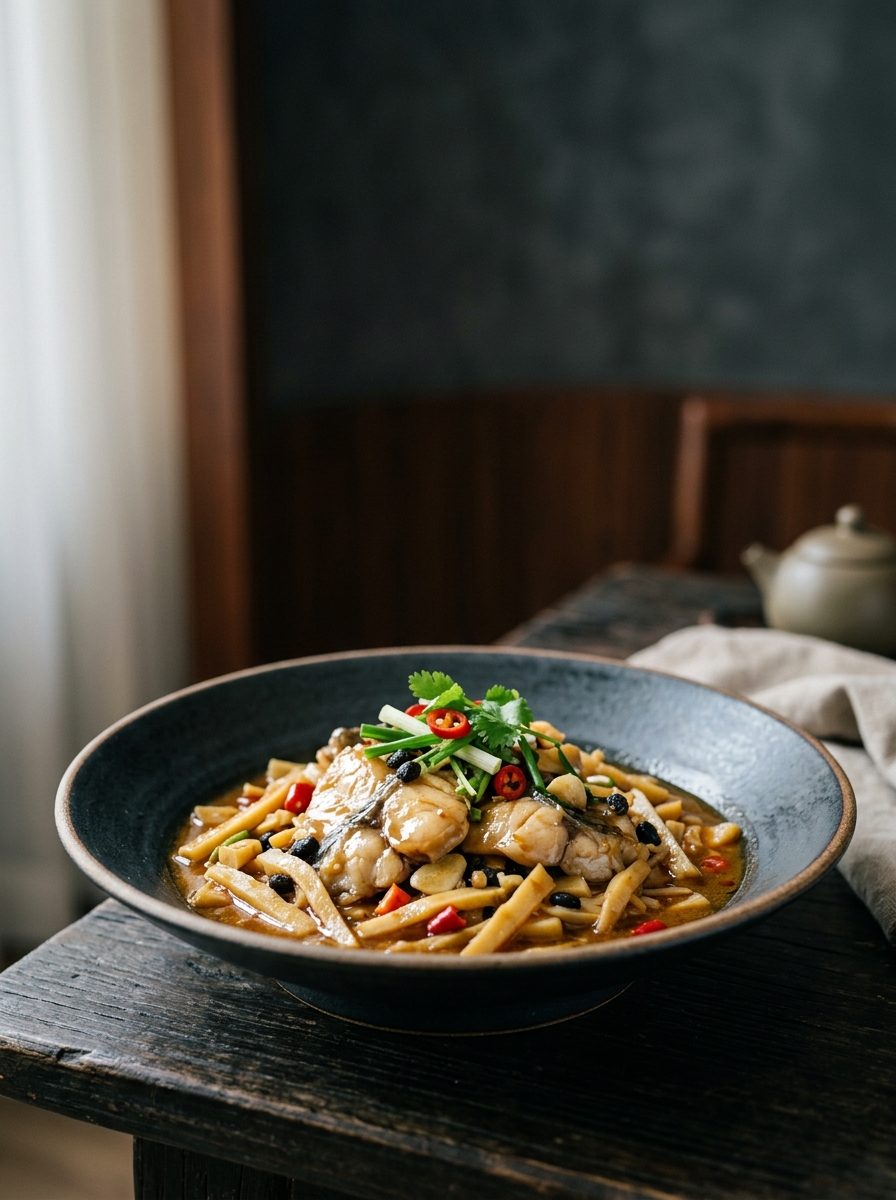
Laoyou — literally old friend — is a Nanning flavour built on sourness first and heat second: pickled bamboo shoots give the tang, fermented black beans give depth, and a prepared laoyou sauce ties them together. The report's sequence matters: the fish must be fried first, undisturbed, until it sets and crisps, because a laoyou braise is short — five minutes — and will not rescue fish that was never properly seared. The aromatics get only thirty seconds before the paste goes in, and the paste only twenty seconds on low heat, because both turn bitter if pushed further. Reducing to about 50 ml of sauce is the finish line, not a suggestion — more sauce and the dish is watery, less and it is salty. The final herbs go in off the heat and are tossed for five seconds in residual heat, which warms them without wilting them into the sauce.
| Ingredient | US | Metric | Substitute / note |
|---|---|---|---|
| Snakehead (wuyu) fillet, skinned and boned | 10.5 oz | 300 g | Any firm white fish fillet works if snakehead is unavailable (adaptation). |
| Laoyou sauce (ready-made paste) | 1.4 oz | 40 g | From a Chinese grocery; if unavailable, use a sour-spicy pickled-vegetable paste and adjust salt to taste (adaptation). |
| Pickled bamboo shoots, cut into 0.5 cm shreds | 1.8 oz | 50 g | Rinse if very sour or salty. |
| Dried fermented black beans (douchi) | 0.35 oz | 10 g | Crush with the flat of a knife to release aroma, per the report. |
| Garlic, minced | 0.5 oz | 15 g | — |
| Scallion and coriander, chopped | 0.2 oz | 5 g | Tossed in off the heat. |
| Salt, for marinating | 1 tsp | 5 g | Report step quantity; not in the report ingredient table. |
| Cooking wine, for marinating | 2 tsp | 10 ml | Report step quantity; not in the report ingredient table. |
| Ready-made stock | 3/4 cup + 1 tbsp | 200 ml | Chicken stock or water with a pinch of salt (adaptation). |
| Neutral cooking oil | 2 tbsp | 30 ml | — |
The fry is what holds this dish together: a hot pan, dry fish surface, and no early flipping give a crisp skin that survives a five-minute braise. The braise is for flavour, not cooking — the fish is already nearly done when it goes back in. If the fish is moved too much at either stage, it falls apart and the sauce turns into fish soup.
A Nanning-style sour-spicy paste built on pickled vegetables and fermented beans; it is sold ready-made in Chinese groceries and is the shortcut the report itself uses.
Usually it was flipped before it set, crowded in the pan, or stirred during the braise. Fry in a single layer and stir as little as possible.
Fresh shoots lack the sourness that defines laoyou; pickled shoots are essential here.
Best eaten fresh. Leftovers keep 1 day refrigerated; reheat gently until steaming hot throughout and do not reheat more than once. Not recommended for freezing — the fried fish turns soggy.
Pan-fried snakehead braised briefly in a sour-spicy laoyou sauce with pickled bamboo and black beans.
Ingredients: 300 g snakehead fillet; 40 g laoyou sauce; 50 g pickled bamboo; 10 g fermented black beans; 15 g garlic; 5 g scallion and coriander; 5 g salt; 10 ml cooking wine; 200 ml stock; 30 ml oil.
Steps: 1) Marinate fish 5 minutes. 2) Pan-fry 2 minutes per side. 3) Bloom aromatics, add paste. 4) Braise 5 minutes, reduce 1 minute, finish with herbs.
Sichuan fish fillet in a tingly, chilli-topped broth — made with fillet, not a whole fish.
Silky tofu in a tingly, spicy bean-paste sauce.
Shrimp flash-fried in hot oil until the shells turn crisp and red, in a lightly sweet, savoury glaze.
Source note: ingredients, quantities and steps are adapted from the original ClouChef R&D report for 老友鱼 (data/reports/191.md). The report's pricing, margin and marketing sections are deliberately omitted here; no B2B cost is presented as a home-cook cost. The salt and cooking-wine quantities come from the report's steps, not its ingredient table, and the fish substitution and safety temperature are home adaptations, all labelled as such. Original poster image: clouchef.com (老友鱼_191.jpeg).