Spicy Boiled Fish
Sichuan fish fillet in a tingly, chilli-topped broth.
← Home · Anhui fermented banquet
Mandarin fish, lightly fermented until it smells strong and tastes deeply savoury, steamed wrapped in caul fat with ham, mushrooms and bamboo. Adapted for a home kitchen from the original ClouChef R&D report — 徽州臭鳜鱼, report 127. The smell is the point — and the hurdle.
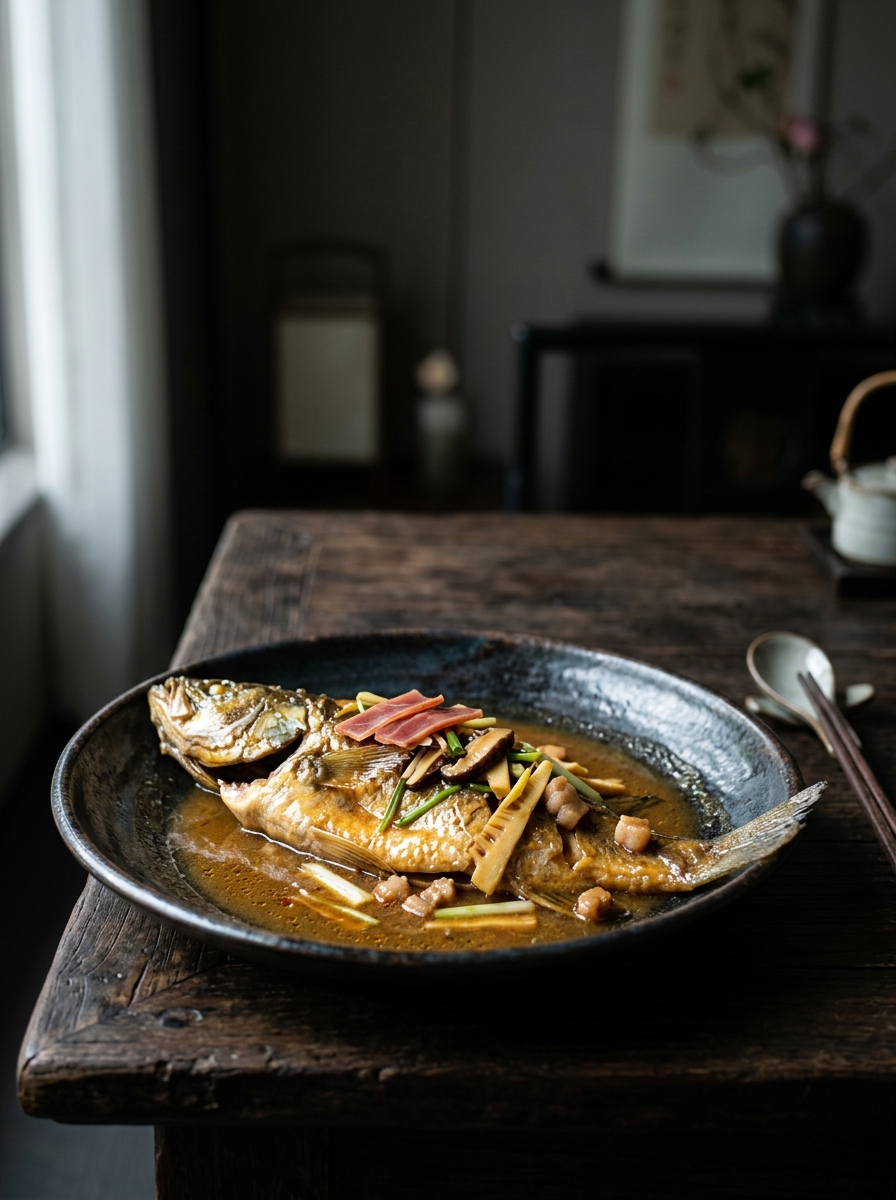
Stinky mandarin fish is a controlled-fermentation dish, and its logic is the opposite of fresh fish cookery: a short ferment, two to three days, lets the flesh develop the pungent, cheesy, deeply savoury aroma that gives the dish its name, while the meat stays firm enough to steam. The wrapping is the second idea. Caul fat melted over the fish in the steamer bastes it continuously, so a lean freshwater fish comes out moist and glossy instead of dry. Ham, mushrooms and bamboo shoots on top are not decoration; they season the steaming juices, which are then thickened lightly and poured back over the fish, so nothing that dripped out is wasted. The balance to hold is fermentation time: too short and there is no character, too long and the flesh turns soft and the smell overwhelms the flavour. Serve the fish whole at the table, spooning the thickened juices over each portion so every serving carries ham, mushroom and bamboo.
| Ingredient | US | Metric | Substitute / note |
|---|---|---|---|
| Mandarin fish (guiyu), gutted, about 600 g | 1.3 lb | 600 g (1 fish) | HOME ADAPTATION (strongly recommended): buy ready-fermented stinky mandarin fish from a reputable Anhui/Huizhou supplier. Home fermentation is possible but hard to control safely; see steps. |
| Pork caul fat, enough to wrap the fish | 0.7 oz | 20 g | Ask a butcher; if unavailable, cover the fish tightly with greased parchment and foil instead — the steaming time is unchanged but the self-basting effect is reduced (adaptation). |
| Cured ham, diced | 0.35 oz | 10 g | Jinhua-style ham if you can find it (adaptation). |
| Dried shiitake, soaked, diced | 0.5 oz | 15 g | — |
| Fresh bamboo shoots, diced | 0.7 oz | 20 g | Canned bamboo shoots, drained, work (adaptation). |
| Salt | 1 tsp | 5 g | For the ferment rub. |
| Shaoxing wine | 1 tbsp | 15 ml | For the ferment rub. |
| Light soy sauce | 2 tsp | 10 ml | — |
| Sugar | 1 tsp | 5 g | — |
| Corn starch mixed with a little water, for the glaze | To thicken | To thicken | The source says a little starch; no quantity is given, so add a teaspoon at a time (adaptation). |
| Scallions or coriander, to garnish | To taste | To taste | — |
The ferment is the flavour: enzymes and microbes break proteins down into the savoury compounds that make the fish taste far more intense than fresh fish. Caul fat matters because mandarin fish is lean — without a fat blanket, fifteen minutes of steam dries the surface before the centre is done. Wrapping fully, with no gaps, is the report's control point, not a nicety.
Yes — pungent is normal and expected; the taste is much milder and deeply savoury. Ventilate the kitchen while steaming. A rotten or ammonia-sharp smell beyond pungency means the fish has gone too far — discard it.
It is the risky part of this dish, which is why this page recommends ready-fermented fish. If you ferment at home, keep the fish refrigerated throughout, never at room temperature, and discard anything slimy or foul beyond the expected pungency.
A firm freshwater fish such as perch or bass can be substituted with ready-fermented preparation, but the classic dish is mandarin fish; the flavour will differ (adaptation).
Best eaten fresh from the steamer. Leftovers keep 1 day refrigerated; reheat by steaming until steaming hot throughout. Do not freeze, and do not keep fermented raw fish beyond the fermenting window.
Lightly fermented mandarin fish steamed in caul fat with ham, mushrooms and bamboo.
Ingredients: 600 g mandarin fish; 20 g pork caul fat; 10 g ham; 15 g shiitake; 20 g bamboo shoots; 5 g salt; 15 ml wine; 10 ml soy sauce; 5 g sugar.
Steps: 1) Ferment 2–3 days (or buy ready-fermented). 2) Wrap fish fully in caul fat, top with ham, mushroom, bamboo, soy, sugar. 3) Steam on high heat 15 minutes. 4) Thicken juices lightly, pour back, garnish, serve whole.
Sichuan fish fillet in a tingly, chilli-topped broth.
Shrimp flash-fried until the shells turn crisp and red.
Gently poached chicken, chilled silky, with a ginger-scallion dip.
Source note: ingredients, quantities and steps are adapted from the original ClouChef R&D report for 徽州臭鳜鱼 (data/reports/127.md). The report's pricing, margin and marketing sections are deliberately omitted here; no B2B cost is presented as a home-cook cost. Original poster image: clouchef.com (徽州臭鳜鱼_127.jpeg). The ready-fermented purchase recommendation, the fridge-temperature warning, the caul-fat alternative and the starch quantity are adaptations and are labelled as such; the source gives no starch quantity.