Spicy Boiled Fish
Fish poached in a fiery, numbing chilli broth.
← Home · Anhui (Huizhou) fermented whole fish braised
Salt-cured mandarin fish, pan-fried until golden, then braised with pork belly, bamboo and chillies in a sauce that clings to the whole fish. Adapted for a home kitchen from the original ClouChef R&D report — 徽州咸鲜鳜鱼, report 64.
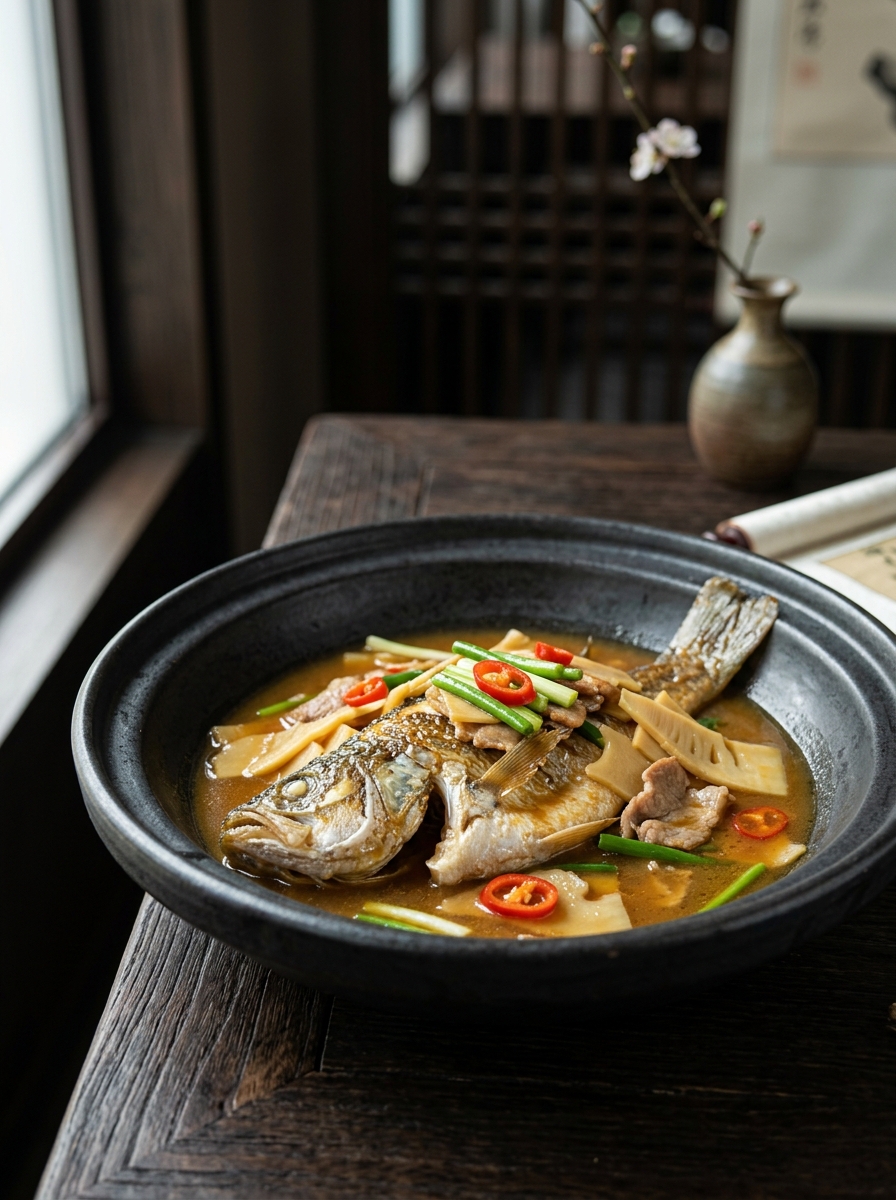
This is the calmer cousin of stinky mandarin fish: the same fermented, salty-savoury character, but bought as ready-cured fish rather than fermented at home for two days. The report's discipline is in the frying: the fish goes in skin-side down into oil at 180 °C and must not be moved for four full minutes, until the skin sets golden, because an early flip tears the skin and ruins the whole-fish presentation. Then pork belly renders its fat into the pan, bamboo adds crunch, and the fish braises in just enough hot water to cover half of it — too much and it becomes soup, too little and it dries out. Basting with a spoon two or three times replaces flipping, so the fish stays whole while the sauce reduces to a clinging glaze. Taste before adding the extra salt: cured fish already carries plenty. The whole fish, sauce clinging and skin intact, is the presentation the report asks for.
| Ingredient | US | Metric | Substitute / note |
|---|---|---|---|
| Salt-cured mandarin fish | 14 oz | 400 g | One fish, about 400 g; buy cured mandarin fish from a Chinese grocer — fresh fish is not a substitute here (adaptation). |
| Fresh bamboo shoots, sliced | 1.8 oz | 50 g | Sliced 0.3 cm thick, blanched 30 seconds. |
| Pork belly slices | 1.1 oz | 30 g | Sliced 0.2 cm thick. |
| Dried red chillies, cut into segments | 0.2 oz | 5 g | — |
| Ginger slices | 0.4 oz | 10 g | Sliced 0.1 cm thick. |
| Scallion segments | 0.4 oz | 10 g | Cut 3 cm long. |
| Light soy sauce | 1.0 tbsp | 15 ml | — |
| Dark soy sauce | 1.0 tsp | 5 ml | For colour. |
| Sugar | 0.2 oz | 5 g | — |
| Cooking wine | 1.3 tbsp | 20 ml | Shaoxing wine. |
| Salt | 0.1 oz | 2 g | Only if needed — taste first, per the report. |
| Rapeseed oil, for frying | 2.0 tbsp | 30 ml | Any neutral oil works. |
| Hot water, for braising | 13 tbsp | 200 ml | About enough to cover half the fish, per the report. |
The first side must fry undisturbed for four minutes at 180 °C. Oil that is too cool sticks the skin to the pan; oil that is too hot burns the outside while the inside stays raw. After that, basting replaces flipping entirely — the fish never turns again, which is how it arrives whole.
Cured fish varies, which is why the report makes the 2 g of salt conditional: taste the sauce before adding any.
Three cuts down to the bone let heat and sauce reach the thickest flesh evenly.
The report's presentation is a whole fish; fillets cook faster and break the braise timing, so reduce the braise if you must use them.
Best eaten fresh. Leftovers keep 1 day refrigerated; reheat gently until steaming hot throughout and do not reheat more than once.
Salt-cured mandarin fish, pan-fried until golden, then braised with pork belly, bamboo and chillies in a sauce that clings to the whole fish. Adapted for a home
Ingredients: 400 g salt-cured mandarin fish; 50 g bamboo; 30 g pork belly; 5 g dried chillies; 10 g ginger; 10 g scallion; 15 ml light soy; 5 ml dark soy; 5 g sugar; 20 ml cooking wine; 2 g salt (if needed); 30 ml oil; 200 ml hot water.
Steps: 1) Rinse and dry fish; score back 3 cuts; blanch bamboo 30 seconds. 2) Fry skin-side down at 180 °C for 4 minutes without moving; flip, fry 3 minutes. 3) Render pork belly, bloom aromatics, toss bamboo 30 seconds. 4) Return fish; add seasonings and 200 ml hot water; simmer 10 minutes, basting. 5) Reduce on high heat until sauce clings; salt only if needed.
Fish poached in a fiery, numbing chilli broth.
Silky tofu in a tingly, spicy bean-paste sauce.
Red-braised pork belly, sweet, savoury and meltingly tender.
Source note: ingredients, quantities and steps are adapted from the original ClouChef R&D report for 徽州咸鲜鳜鱼 (data/reports/64.md). The report's pricing, margin and marketing sections are deliberately omitted here; no B2B cost is presented as a home-cook cost. The report's ingredient cost table is arithmetically wrong — it totals zero against line items that add up to a substantial sum, and its cost summary contradicts its own conclusion — so all cost figures are omitted. Original poster image: clouchef.com (徽州咸鲜鳜鱼_64.jpeg).