Spicy Hunan Lamb Stew with White Radish
Warming winter stew of lamb and white radish in a spicy broth.
← Home · Northwest stew sharing
Lamb leg slow-stewed two hours with carrot, potato and onion, seasoned at the last minute with salt and cumin, eaten by hand. Adapted for a home kitchen from the original ClouChef R&D report — 手抓羊肉, report 136.
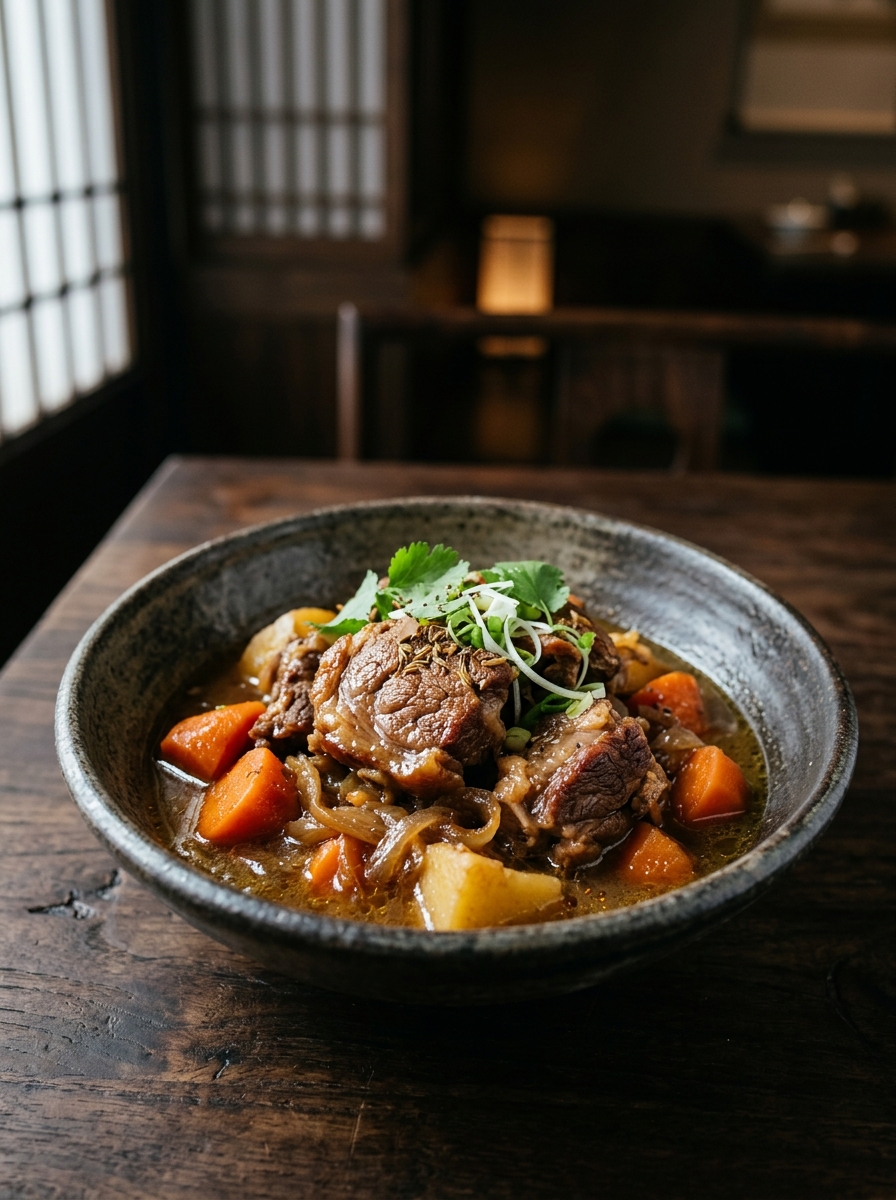
Hand-grabbed lamb is deliberately simple, and its simplicity is the discipline: there are no sauces or spices to hide behind, so the lamb itself has to be clean-tasting and tender. Soaking the meat in cold water for thirty minutes and blanching it properly take away the blood and gaminess that put people off lamb. Then a two-hour simmer at 90–95 °C, never a rolling boil, dissolves enough collagen for the meat to pull apart while keeping it in pieces you can actually pick up. Vegetables go in with the meat so they drink up the broth, and salt waits until five minutes before the end — salted early, the meat firms up and never quite relaxes. The cumin at the finish is not a marinade but a seasoning, so its warmth sits on the surface of the meat rather than disappearing into the stew. Flatbread for scooping and a simple salad are all the accompaniment this rich, communal stew needs.
| Ingredient | US | Metric | Substitute / note |
|---|---|---|---|
| Lamb leg meat, cut into 3 cm chunks | 10.6 oz | 300 g | Lamb leg or shoulder in the source; shoulder is fattier and more forgiving (adaptation). |
| Carrot, cut into chunks | 2.8 oz | 80 g | — |
| Potato, cut into chunks | 2.8 oz | 80 g | — |
| Onion, cut into chunks | 2.1 oz | 60 g | — |
| Salt | 1 tsp | 5 g | Added near the end, as in the source. |
| Cumin powder | 1 tsp | 3 g | — |
| Water | 2 cups | 500 ml | — |
| Coriander, to garnish (optional) | To taste | To taste | The source mentions coriander as an optional garnish. |
Salt draws moisture out of meat by osmosis, which is useful for curing and unhelpful for a stew you want juicy — added early, it tightens the fibres before the collagen has softened, and the meat stays firmer. A gentle 90–95 °C simmer is the other half: hot enough to convert collagen to gelatin over two hours, cool enough not to shred the meat into soup. A rolling boil would do the same job faster and worse.
Usually the soak or blanch was skipped or rushed. Thirty minutes soaking plus a proper blanch and skim is the source's full de-gaming routine.
You can, but they cook faster and fall apart sooner; reduce the stew to about 1 hour and check tenderness (adaptation). The classic cut is leg or shoulder chunks.
That is the tradition — hence the name — but chopsticks or a fork are fine. The point is the communal, pull-apart eating, not the utensil.
Keeps 3 days refrigerated in its cooking liquid; reheat until steaming hot throughout (centre at least 75 °C). Freezes well for up to 1 month in liquid; thaw overnight in the fridge.
Lamb leg slow-stewed with carrot, potato and onion, finished with salt and cumin.
Ingredients: 300 g lamb leg; 80 g carrot; 80 g potato; 60 g onion; 5 g salt; 3 g cumin powder; 500 ml water.
Steps: 1) Soak lamb 30 minutes, cut 3 cm chunks. 2) Blanch 3 minutes, rinse. 3) Stew with vegetables at 90–95 °C for 2 hours. 4) Add salt and cumin 5 minutes before the end, keep ~50 ml liquid. 5) Serve piled with juices.
Warming winter stew of lamb and white radish in a spicy broth.
Henan-style lamb soup noodles with sesame paste and a warming broth.
Beef braised until tender with potatoes that soak up the savoury sauce.
Source note: ingredients, quantities and steps are adapted from the original ClouChef R&D report for 手抓羊肉 (data/reports/136.md). The report's pricing, margin and marketing sections are deliberately omitted here, and no cost figures are given: the source's cost table does not add up from its own components, so cost figures are omitted rather than repeated. Original poster image: clouchef.com (手抓羊肉_136.jpeg). The 2-serving presentation and the shoulder-cut and slow-cooker notes are adaptations and are labelled as such.