Lamb Noodle Soup
Henan-style lamb soup noodles with sesame paste, tofu skin and a warming, savoury broth.
← Home · Zhejiang duck soup winter
An old duck simmered for two hours with Jinhua ham, dried scallops and shrimp, finished with white radish that soaks up the broth. Adapted for a home kitchen from the original ClouChef R&D report — 火腿老鸭煲, report 54.
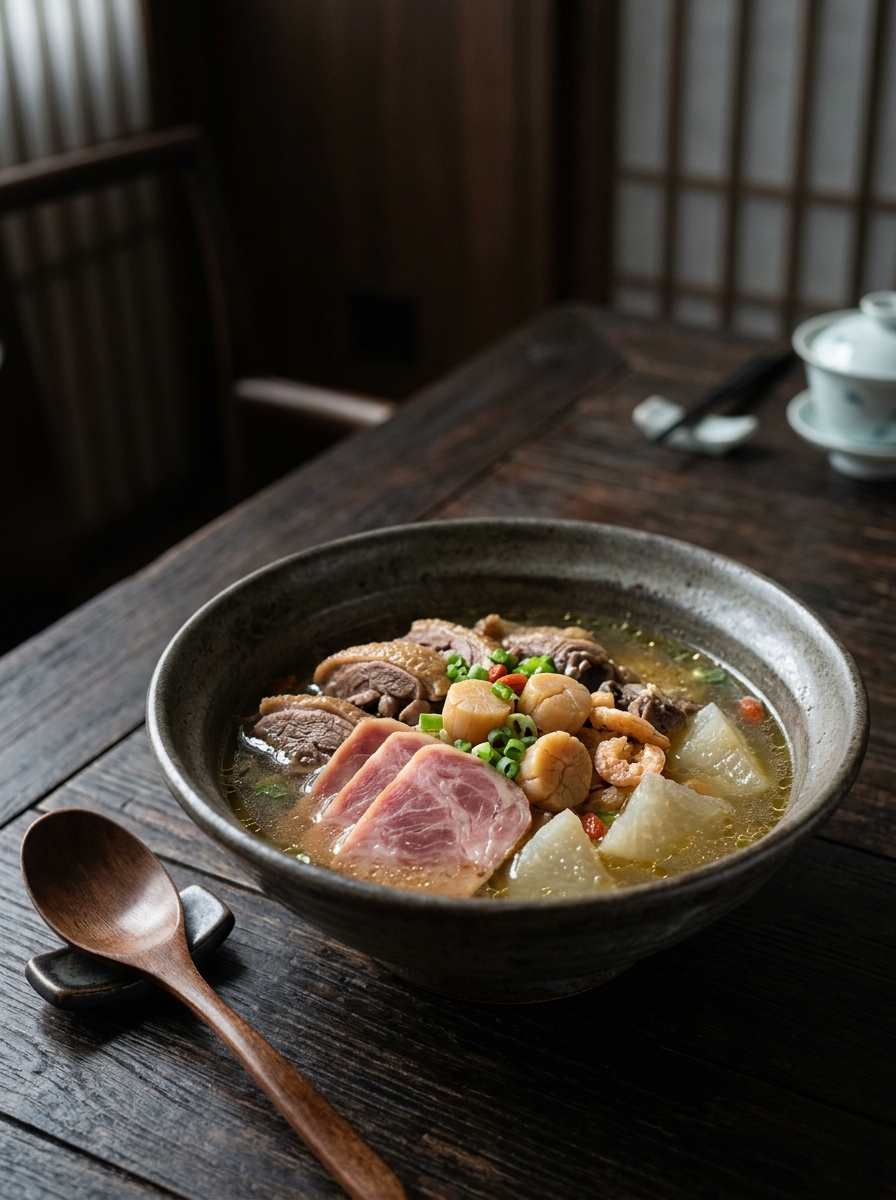
Old duck is not a young duck cooked longer; it is a different bird, leaner and tougher, and the report's method is built around giving it the time it needs without clouding the broth. The duck is blanched with ginger and wine, rinsed in warm water — cold water would tighten the fat and dull the flavour — and then simmered in a clay pot that is never opened, because lifting the lid drops the temperature and lets the broth's clarity and aroma escape. The heat sequence matters too: a hard boil first, then the smallest possible simmer, because an all-day hard boil makes the soup cloudy and the meat stringy, while an all-low simmer never develops the broth's depth. Salt goes in only at the end, after tasting, because the ham is already salty and early salt both toughens the duck and risks oversalting the whole pot. Radish goes in for the last thirty minutes only, long enough to turn translucent and soak up broth, but not so long that it dissolves into it.
| Ingredient | US | Metric | Substitute / note |
|---|---|---|---|
| Old duck, cleaned | 2.2 lb | 1000 g | Cut into 4–6 pieces. A stewing duck or older roasting duck works (adaptation). |
| Jinhua ham, centre cut | 1.8 oz | 50 g | Sliced about 0.3 cm thick. |
| Dried scallops | 0.3 oz | 8 g | Soak in warm water for 10 minutes. |
| Dried shrimp | 0.35 oz | 10 g | Soak in warm water for 10 minutes. |
| White radish, in 3 cm chunks | 10.6 oz | 300 g | Added for the last 30 minutes. |
| Scallion | 0.35 oz | 10 g | Tied in a knot for the broth; removed before serving. |
| Ginger slices | 0.5 oz | 15 g | — |
| Cooking wine | 1 tbsp + 1 tsp | 20 ml | For blanching. |
| Salt | ½ tsp | 3 g | Added at the end, after tasting; the report notes ham is salty, so use half your instinct and then adjust (adaptation, labelled here). |
| Hot water, for the pot | About 8 cups | 2 litres | Add enough at the start; do not top up mid-simmer if you can avoid it (adaptation). |
| Scallion, chopped, to garnish | To taste | To taste | — |
The report's heat curve — ten minutes hard, then the smallest flame — is what keeps the broth clear while still extracting flavour from a tough old bird. Lifting the lid is the quiet failure: each peek drops the temperature, extends the cook, and lets aroma escape, so the pot stays shut for the full two hours.
Because ham is already salty, and early salt toughens duck and risks an oversalted pot. Taste first, then salt.
Cold water tightens the fat and dulls flavour, per the report; warm water keeps the duck clean without shocking it.
It will cook faster and give a thinner broth; reduce the simmer and expect a lighter pot (adaptation).
Keeps well: 2 days refrigerated, and the broth improves overnight. Reheat until boiling throughout. Freezes well for up to 1 month (duck and broth; radish goes soft, so add fresh radish when reheating).
Old duck simmered two hours with ham, scallops and shrimp, finished with radish.
Ingredients: 1000 g old duck; 50 g ham; 8 g scallops; 10 g shrimp; 300 g white radish; 10 g scallion; 15 g ginger; 20 ml cooking wine; 3 g salt (at the end); about 2 litres hot water; scallion to garnish.
Steps: 1) Prep ingredients. 2) Blanch duck 3 minutes, rinse warm. 3) Boil, simmer covered 90 minutes. 4) Add radish, simmer 30 minutes, season, serve hot.
Henan-style lamb soup noodles with sesame paste, tofu skin and a warming, savoury broth.
Beef braised until tender with potatoes that soak up the savoury sauce — a classic family stew.
Gently poached chicken, chilled for a firm, silky texture, served with a ginger-scallion dip.
Source note: ingredients, quantities and steps are adapted from the original ClouChef R&D report for 火腿老鸭煲 (data/reports/54.md). The report's pricing, margin and marketing sections are deliberately omitted here; no B2B cost is presented as a home-cook cost. Home servings (2–3, from one restaurant pot) and the slow-cooker substitute are adaptations and are labelled as such. Original poster image: clouchef.com (火腿老鸭煲_54.jpeg).