Di San Xian
Eggplant, potato and pepper stir-fried in a garlicky sauce — the classic northeastern trio.
← Home · chestnut cabbage braise
Napa cabbage braised with chestnuts in chicken stock until the leaves are tender and the sauce turns thick. Adapted for a home kitchen from the original ClouChef R&D report — 栗子烧白菜, report 210.
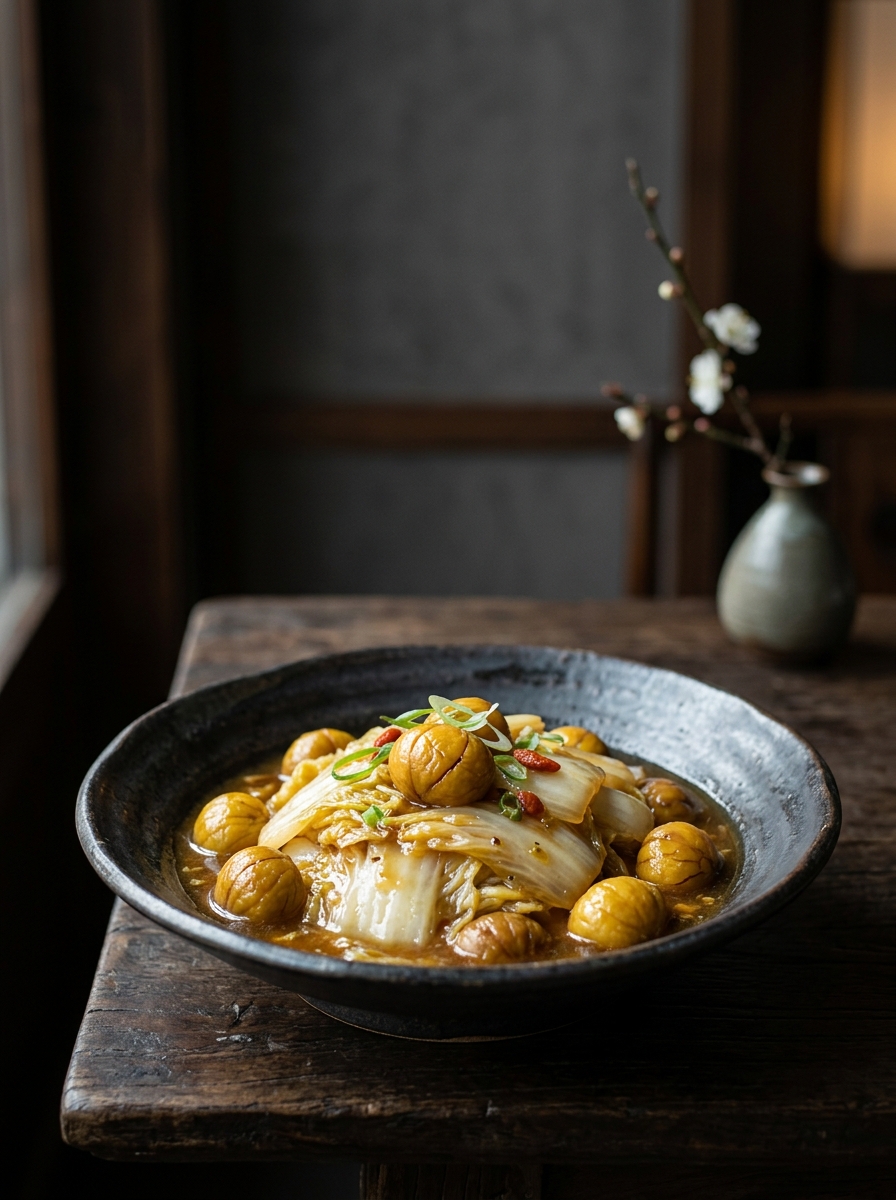
This is the quietest dish in the chestnut series, and its charm is that nothing in it shouts: cabbage, chestnuts and stock, seasoned with salt and a little chicken essence. The technique is all in the cabbage preparation — stems sliced thin on the diagonal, no more than half a centimetre, so they cook at the same speed as the leaves, which are torn by hand into large pieces. If the stems go in thick, they stay crunchy while the leaves collapse; if they go in thin, everything finishes together after eight minutes under a lid. The chestnuts must be fully peeled, inner skin and all, because any leftover membrane turns bitter in the braise and no amount of stock covers it. Reducing until the sauce is a third of its original volume is what turns a watery vegetable braise into something that coats, and serving it hot matters more here than in richer dishes, because a cooled cabbage braise tastes flat. It is winter home cooking: cheap, warming, and better than its ingredient list suggests.
| Ingredient | US | Metric | Substitute / note |
|---|---|---|---|
| Shelled chestnuts | 3.5 oz | 100 g | Score a cross on top, boil 3 minutes, peel hot, removing all inner skin. |
| Napa cabbage, cleaned | 8.8 oz | 250 g | Half leaves, half stems: stems sliced diagonally 0.5 cm, leaves torn by hand. |
| Chicken or bone stock | 3/4 cup + 1 tbsp | 200 ml | Or concentrated stock diluted to 200 ml. |
| Ginger slices | 0.35 oz | 10 g | — |
| Salt | 1/2 tsp | 3 g | — |
| Chicken essence | 1/3 tsp | 2 g | Optional; omit if you prefer (adaptation). |
| Neutral cooking oil | 1 tbsp | 15 ml | — |
Cabbage stems and leaves cook at different speeds, so they must be cut to match: stems sliced thin, leaves torn large, stems fried first. The braise is eight minutes on medium-low heat, not a boil, because hard boiling turns cabbage to mush while leaving chestnuts underdone. The reduction is measured by volume — one-third remaining — which is the difference between a coated braise and a watery one.
The inner skin lifts easily while hot and sticks stubbornly once cold — and leftover skin tastes bitter.
The braise boiled too hard or ran longer than 8 minutes. Keep it medium-low and timed.
Yes, but it is tougher; add 2 minutes to the braise (adaptation).
Keeps 2 days refrigerated; reheat gently until steaming hot throughout. Not recommended for freezing — cabbage turns watery.
Napa cabbage braised with chestnuts in stock until tender and glossy.
Ingredients: 100 g chestnuts; 250 g napa cabbage; 200 ml stock; 10 g ginger; 3 g salt; 2 g chicken essence (optional); 15 ml oil.
Steps: 1) Peel chestnuts, prepare cabbage. 2) Fry ginger and stems. 3) Add leaves, chestnuts and stock. 4) Braise 8 minutes, reduce 2 minutes, serve hot.
Eggplant, potato and pepper stir-fried in a garlicky sauce — the classic northeastern trio.
Silky tofu in a tingly, spicy bean-paste sauce.
Beef braised until tender with potatoes that soak up the savoury sauce — a classic family stew.
Source note: ingredients, quantities and steps are adapted from the original ClouChef R&D report for 栗子烧白菜 (data/reports/210.md). The report's pricing, margin and marketing sections are deliberately omitted here; no B2B cost is presented as a home-cook cost. The report's cabbage cost line is internally inconsistent, so no cost figures are reproduced. The vegetarian and Savoy variations are home adaptations and are labelled as such. Original poster image: clouchef.com (栗子烧白菜_210.jpeg).