Char Siu
Cantonese roast pork made in a home oven or air fryer, with a sticky, caramelised edge and no barbecue pit.
← Home · Cantonese roast whole bird advanced
A whole goose, inflated, glazed with malt-vinegar skin water, air-dried, then roasted in two heats until the skin shatters and the meat stays juicy. Adapted for a home kitchen from the original ClouChef R&D report — 烧鹅, report 22.
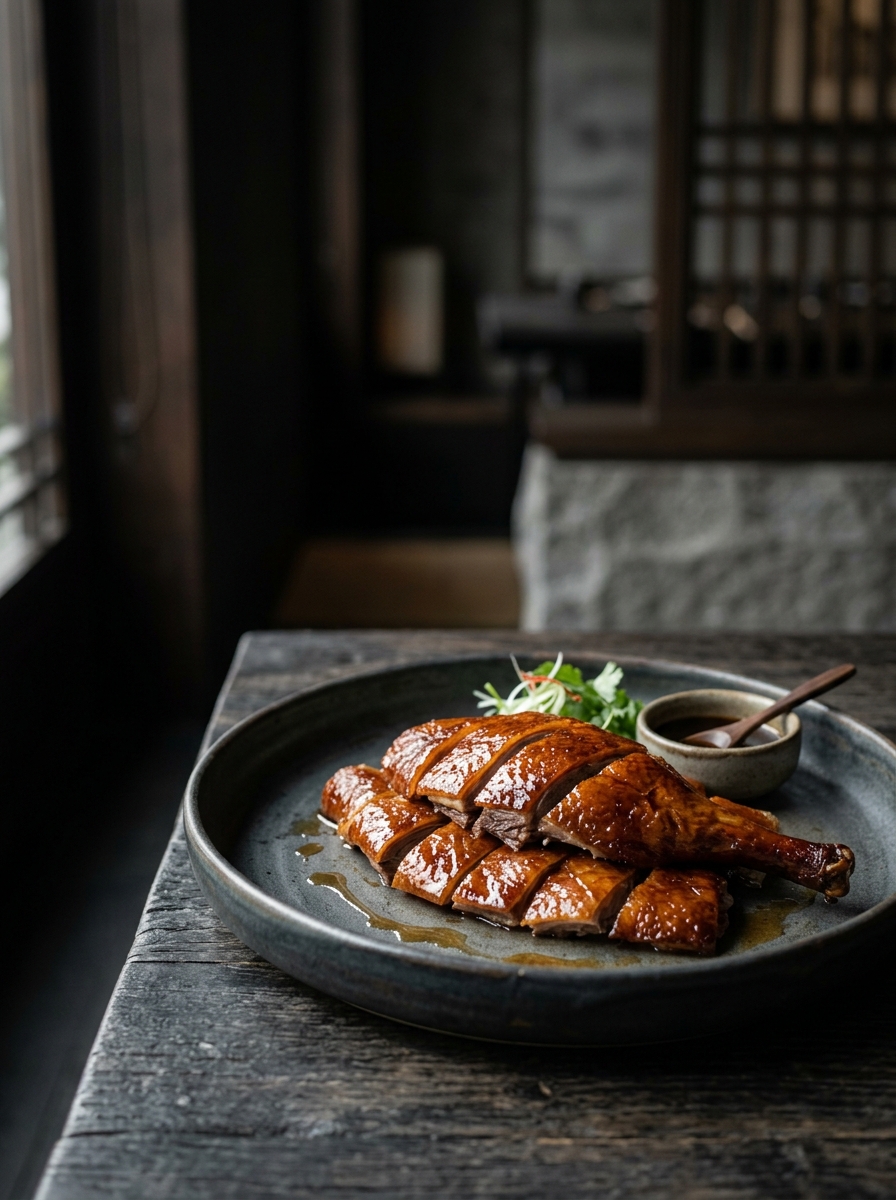
Roast goose skin is a physics problem before it is a recipe: the skin must be separated from the flesh, tightened, glazed and dried before heat ever touches it, or it will never crisp. Inflating the bird through the neck opening lifts the skin away from the meat so hot air can render the fat beneath it; a ten-second boiling-water scald then tightens the pores, and two coats of malt-sugar and vinegar skin water give the colour and the glassy finish. Drying — four to six hours at room temperature, or two with a fan — is the step home cooks most often skip and the one that matters most: any dampness left on the skin steams instead of roasting and leaves blisters. The roast itself is two heats, a fierce fifteen minutes to set and colour the skin, then a gentler fifteen to finish the meat, followed by a five-minute rest that keeps the juices in the bird instead of on the board.
| Ingredient | US | Metric | Substitute / note |
|---|---|---|---|
| Goose, cleaned (about 2.5 kg) | 5.5 lb | 2.5 kg | A whole goose; black-brown goose per the report. A duck can be roasted the same way at a smaller scale (adaptation). |
| Maltose | 3.5 oz | 100 g | For the skin water. |
| White vinegar (9° rice vinegar) | 1¼ cups | 300 ml | For the skin water. |
| Water, for the skin water | About 7 tbsp | 100 ml | — |
| Star anise | 1 tsp | 5 g | For the seasoning; the report lists braising spices without a step — rub them inside the cavity as the home adaptation used here. |
| Cinnamon | ½ tsp | 3 g | For the cavity seasoning. |
| Bay leaves | 2 leaves | 2 g | For the cavity seasoning. |
| Salt | 1 tbsp | 15 g | For the cavity seasoning. |
| Light soy sauce | 2 tbsp | 30 ml | For the cavity seasoning. |
| Plum sauce, to serve | 1 small dish | 30 g | Or braising liquid, per the report. |
Every roast-bird failure traces back to moisture: wet skin steams, and a single constant heat either burns the skin before the meat cooks or cooks the meat while the skin stays soft. The two-heat roast solves the second problem, but only the drying step solves the first. If your kitchen is humid, dry the bird in front of a fan or in the fridge overnight uncovered — the fridge's dry air works well, though it adds hours.
To separate skin from flesh so fat renders under the skin and the skin crisps instead of sticking to the meat.
It was not fully dry before roasting, or the first heat was too low. Dry until smooth and tack-free, and start at 220 °C.
Yes — the report's top and bottom heats translate to a single 220 °C then 180 °C setting, as noted in the steps.
Best eaten fresh from the oven; the skin softens within hours. Leftovers keep 2 days refrigerated; re-crisp in a hot oven until steaming hot. Cooked goose meat freezes well for 1 month, but the skin will not re-crisp fully.
Whole goose, glazed and dried, roasted until the skin shatters.
Ingredients: 1 goose (2.5 kg); skin water: 100 g maltose, 300 ml white vinegar, 100 ml water; cavity: 5 g star anise, 3 g cinnamon, 2 g bay leaves, 15 g salt, 30 ml soy sauce; 30 g plum sauce to serve.
Steps: 1) Inflate goose. 2) Scald and glaze twice. 3) Dry 4–6 hours. 4) Roast two heats, 15 + 15 minutes. 5) Rest 5 minutes, carve and serve.
Cantonese roast pork made in a home oven or air fryer, with a sticky, caramelised edge and no barbecue pit.
Gently poached chicken, chilled for a firm, silky texture, served with a ginger-scallion dip.
Slow-braised pork belly with rock sugar, in an Instant Pot or on the stove, with a glossy, savoury-sweet sauce.
Source note: ingredients, quantities and steps are adapted from the original ClouChef R&D report for 烧鹅 (data/reports/22.md). The report's pricing, margin and marketing sections are deliberately omitted here; no B2B cost is presented as a home-cook cost. The report's cost tables disagree with each other (an ingredient total of 81.60 against a summary of 63.05), so no cost figures are reproduced. The cavity-seasoning placement, the single-oven translation and the serving size are adaptations and are labelled as such. Original poster image: clouchef.com (烧鹅_22.jpeg).