Mapo Tofu
Silky tofu in a tingly, spicy bean-paste sauce.
← Home · Sichuan glass noodles minced pork
Glass noodles soaked in a savoury minced-pork sauce — the 'ants' are the pork, not insects. Adapted for a home kitchen from the original ClouChef R&D report — 蚂蚁上树, report 178.
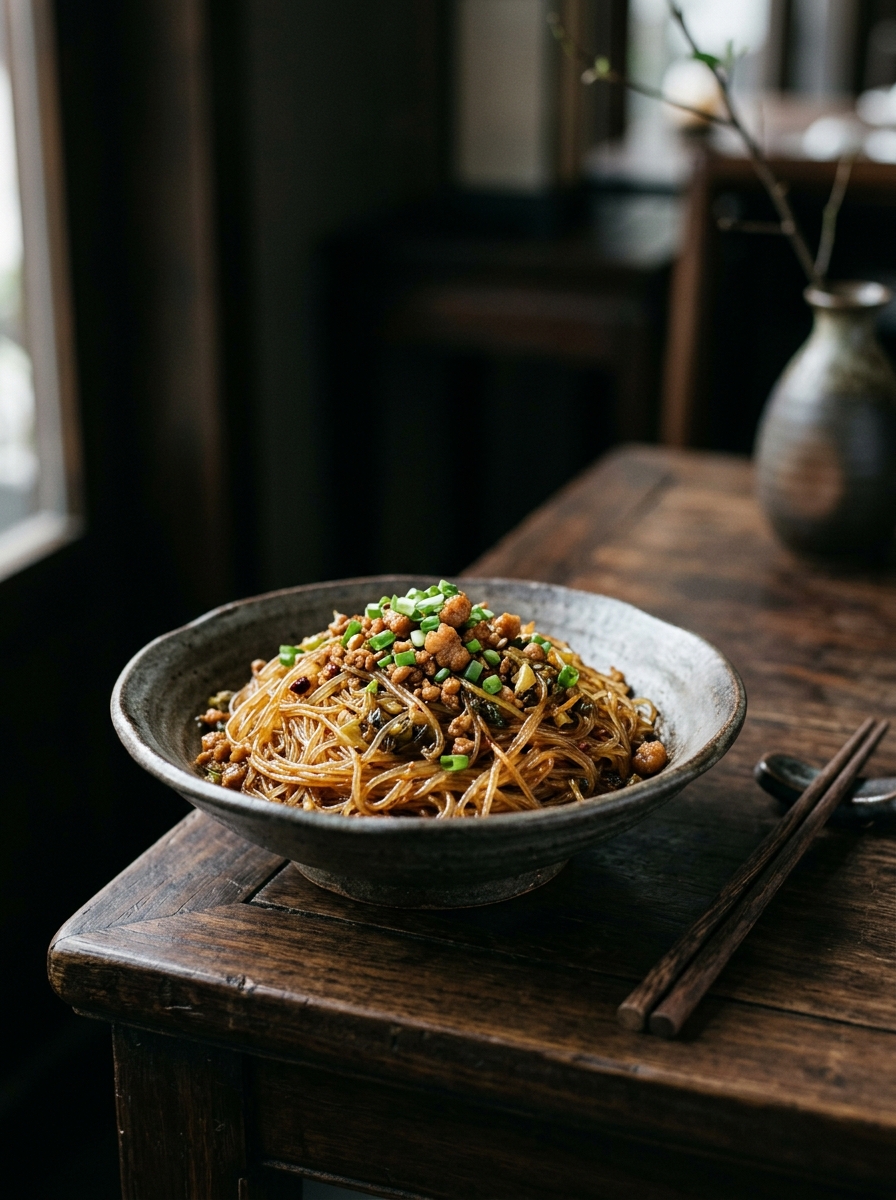
The name is the picture: dark flecks of minced pork clinging to translucent noodles like ants on a tree, and the dish works when the noodles stay separate enough for that picture to read. That starts with the soak — 40 °C warm water for 20 minutes, never hotter, so the noodles soften without turning to mush — and with cutting them into 15 cm lengths, so they can be tossed and eaten without tangling into a single clump. The pork is fried first and set aside, so it cooks fully without overcooking while the sauce is built; the doubanjiang is then fried low until its red oil appears, and the pickled mustard greens go in for just 20 seconds to add their salty crunch. The noodles get at most 60 seconds on high heat, and the pan is finished dry and glossy, with no puddle underneath — wet noodles are the classic failure here, and the report's dry finish is the fix.
| Ingredient | US | Metric | Substitute / note |
|---|---|---|---|
| Dried glass noodles (Longkou vermicelli) | 2.8 oz | 80 g | Soak in 40 °C warm water for 20 minutes, drain, and cut into 15 cm lengths. |
| Minced pork, about 3:7 fat to lean | 1.8 oz | 50 g | — |
| Yibin pickled mustard greens, rinsed and squeezed dry | 0.5 oz | 15 g | Rinse once to remove excess salt. Other pickled mustard greens are a substitute (adaptation). |
| Pixian doubanjiang | 1 tbsp + 1 tsp | 20 g | — |
| Cooking wine | 1 tsp | 5 g | For marinating the pork. |
| Light soy sauce | 2 tsp | 10 g | 5 g for the pork marinade, 5 g for finishing. |
| Sugar | 1/2 tsp | 2 g | — |
| Scallion, chopped | 1 tbsp | 5 g | Blanch in boiling water for 5 seconds, or fry for 5 seconds at 80 °C or above, so it is fully heated before garnishing. |
| Neutral cooking oil | 1 tbsp | 15 g | — |
The report's finish standard is visual: the noodles should look oily and glossy with no liquid pooling underneath. That means soaking at no more than 40 °C, tossing the noodles on high heat for no more than 60 seconds, and finishing with a 20-second high-heat dry-off after the pork returns. Over-soaked noodles or a timid flame both produce the same failure — a clump sitting in sauce. Use a non-stick pan if you have one, and keep everything moving.
No — the 'ants' are the flecks of minced pork clinging to the noodles. The name is a visual joke, and the dish contains no insects.
Usually the soak water was too hot, the soak ran long, or the high-heat toss ran past 60 seconds. Keep the soak at 40 °C and the toss fast.
The pickled greens probably were not rinsed. Rinse them once and squeeze dry before they go in — and remember the doubanjiang is salty too.
Best eaten immediately, while the noodles are glossy and separate. Leftovers keep 1 day refrigerated; reheat in a hot pan with a splash of water until steaming throughout, and expect the noodles to soften and clump. Do not reheat more than once.
Glass noodles tossed with savoury minced pork, pickled greens and doubanjiang.
Ingredients: 80 g dried glass noodles; 50 g minced pork; 15 g pickled mustard greens; 20 g doubanjiang; 5 g cooking wine; 10 g light soy; 2 g sugar; 5 g scallion; 15 ml oil.
Steps: 1) Soak noodles 20 minutes in 40 °C water, cut 15 cm; marinate pork 5 minutes. 2) Fry pork 30 seconds until fully coloured, set aside. 3) Fry doubanjiang low 1 minute to red oil, add greens 20 seconds. 4) Toss noodles on high heat (60 seconds maximum), season. 5) Return pork, dry off 20 seconds, add scallion 5 seconds, serve.
Silky tofu in a tingly, spicy bean-paste sauce.
Henan-style lamb soup noodles with sesame paste, tofu skin and a warming, savoury broth.
Eggplant, potato and green pepper, fried then tossed in a savoury sauce — a classic Northeastern home dish.
Newsletter note: the signup form on the homepage is a static placeholder and does not collect or send anything.
Source note: ingredients, quantities and steps are adapted from the original ClouChef R&D report for 蚂蚁上树 (data/reports/178.md). The report's pricing, margin and marketing sections are deliberately omitted here; no B2B cost is presented as a home-cook cost. Original poster image: clouchef.com (蚂蚁上树_178.jpeg). Serving size for home use (1–2) and the chicken, mushroom and pickled-green substitutes are adaptations and are labelled as such.